Reading the noise
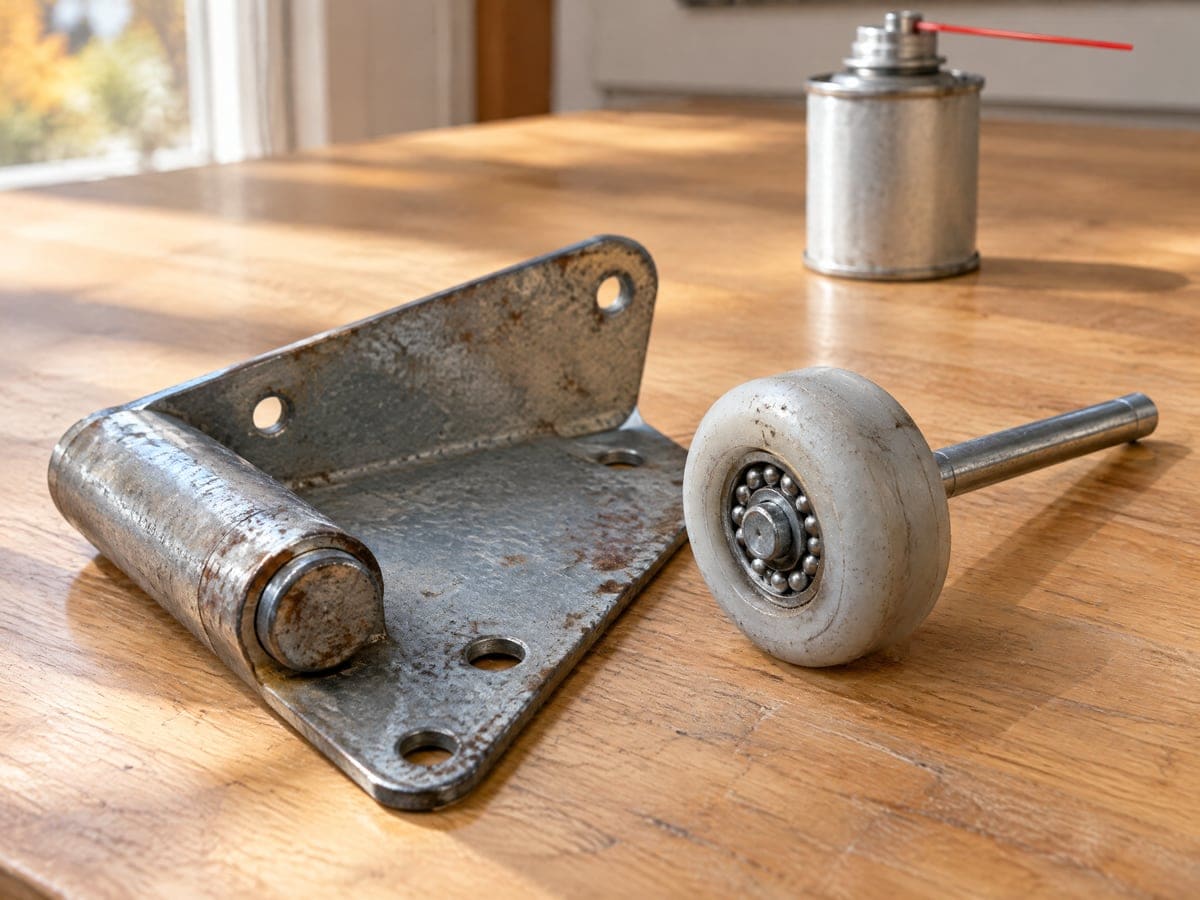
A visit for a loud door is mostly listening, then confirming with a look at the hardware.
1. Run the door once and note where the sound starts
Our technician runs the door through one full cycle. Where the sound begins, where it drops off, and whether it shifts on the way up versus the way down all point in different directions.
2. Squeal
A thin, high squeal usually means a dry pivot. Hinge pins, roller stems and the ends of the springs all rub on every cycle, and without a light film of lubricant they cry out.
3. Grinding
Grinding points at a damaged bearing. The three candidates are grinding rollers with worn or salt-eaten bearings, the bearing plates at each end of the torsion shaft, and the drive gear inside the opener. Our technician confirms the springs are sound first, then isolates the opener to hear whether the grind travels with the door or stays at the motor.
4. Popping or banging
A single loud bang is usually a torsion spring parting. Torsion springs carry the most tension with the door closed; after the bang the door will not lift or feels twice its normal weight. Leave the door closed and keep hands off the wall button. A popping spring makes the door dangerous to raise by hand. Softer pops on every cycle usually mean a panel flexing against a tight roller or a cracked hinge leaf.
5. Rattling
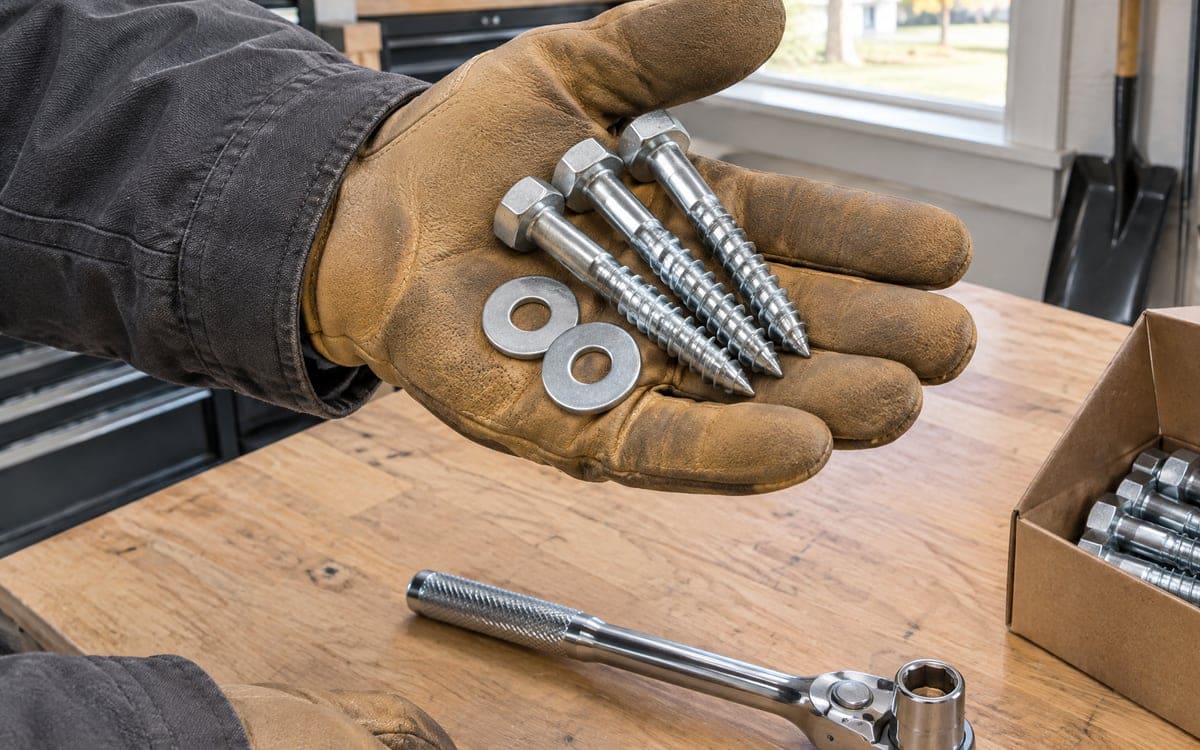
A rattle traces back to loose fasteners. Lag screws, rail bolts and stem nuts all work loose over enough cycles. A door that rattles everywhere has not been touched since it was hung. A tune-up to quiet things down is the fix.
6. Humming from the opener
An opener that hums without moving the door is straining against a load its motor cannot lift. The usual cause is a broken torsion spring: with the spring gone, the opener sees the door's full weight and stalls. A stripped drive gear or a failed starting capacitor can produce the same hum on a door whose springs are sound. We check the springs and door balance before opening the motor housing. See a humming opener for the opener side.
7. Scraping along the track
A steady scrape means the door and the track are no longer in the same plane. That is a wheel bent on its stem, a track pushed in from a bumper, or a bracket loose at the jamb. We look for shiny lines where a wheel has been rubbing, then correct the alignment on the track and its brackets.
A quick map of noises
| Noise | Most likely cause | What it usually needs |
|---|---|---|
| Thin squeal at each pivot | Dry hinges or roller stems | Fresh lubricant, sometimes new hinges |
| Grinding on the way up | Worn or rusted roller bearings | A set of rollers |
| Sudden bang, then a heavy door | A parted torsion spring | Spring replacement |
| Rhythmic click at one spot | A flat on a nylon wheel | Replacement of that roller |
| Rattling from many joints | Loose lags, bolts and stem nuts | Full retorque and a hardware pass |
| Steady hum, door on the floor | Broken spring, stripped drive gear or failed capacitor | Spring or opener work |
| Scraping along a track | Wheel out of true or track out of alignment | Track and roller reset |
The lube list, and what to keep dry
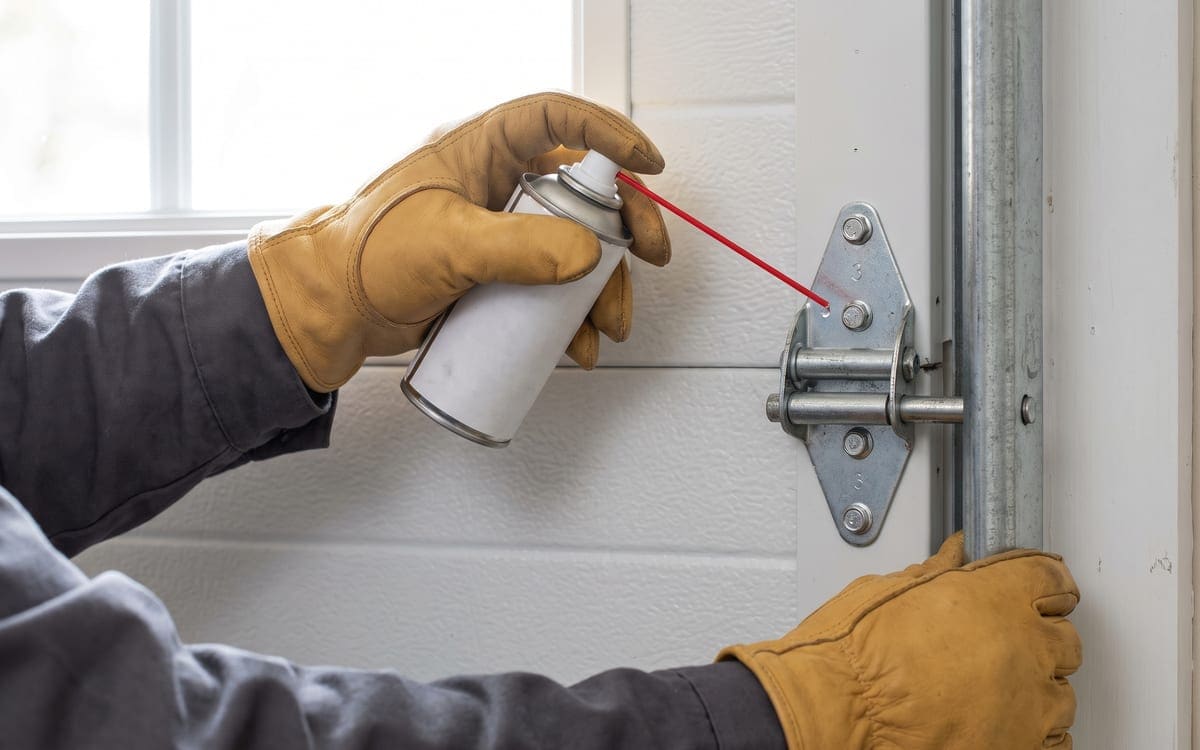
Lubrication solves most squeals with the right product on the right parts. A drop of garage door lubricant where the hinge pin enters the sleeve, and the roller stems where they meet their sleeves, is what to lubricate from the floor. The inside face of the tracks stays dry (grease there catches dust and drags the door), as does the opener chain or belt. The torsion spring coils and the bearing plates at each end of the spring shaft are lubricated on the tune-up visit, not by hand from a ladder.
What takes lubricant, and what stays dry
The right drop on a pivot quiets a door, while grease on a track slows the wheels.
Parts that take lube
- Hinge pivots, with a drop where the pin enters the sleeve
Parts kept dry
- The inside face of the tracks the rollers ride in
- The chain or belt that runs along the opener rail
Use a light garage door lubricant from a small aerosol can. Skip general purpose oil and the degreaser next to it on the shelf.
A door that quiets down after a proper lube was overdue for maintenance, while one that goes loud again inside a week has parts that need swapping rather than more oil.
When we can quiet the door, and when it is worn out
The door has parts left in it when
- Panels, springs and the opener are sound; the noise comes from a few hinges, a stretch of track or a tired set of rollers.
- The door ran quiet a year back, and the noise showed up with wear or the first cold snap.
- A tune-up plus fresh hardware brings the sound to normal.
The door itself is done when
- Sections crack along the top of a panel, or hinge holes tear when we torque them.
- Bottom brackets or the bottom fixture are corroded through.
- A full hardware refresh already happened, and the door is loud again inside a year.
When a new door does make more sense on an older house, when to repair and when to replace is the longer read.
What a noise call checks
A noise call checks the rollers and the hinges on the door, the bearing plates at each end of the spring shaft, the drive gear and sprocket inside the opener, and the lag screws, carriage bolts and stem nuts that hold the hardware tight.
How a noise call runs
- Your call. Tell us which noise, when it started, whether it is worse in the cold, and whether the door still opens and closes.
- The look. We run the door once, then walk it with the opener off. We check hinges, rollers, tracks, cables, springs and the rail.
- The parts list. Our technician names the hinges, rollers or bearings behind the sound. If something bigger turns up, we stop and talk it through.
- The fix and a test run. We change and tighten what needs it, lube what should be lubed, and cycle the door.
Why doors get loud in an Arlington Heights winter
Northern Illinois sees roughly 140 days a year at or below 32 degrees, and about 16 at zero or lower.1 See cold-weather noises and springs for the spring side.
On lighter snowfall, Arlington Heights Public Works spreads a mix of salt and liquid deicer across the streets2 so the roads do not ice over. Road salt and the hardware on a door that sees it all winter covers that side.