
Why no page can quote your price blind
A garage door price depends on which part failed, what grade the replacement is, how heavy the door is, whether the opener has to come apart too, and the shape the rest of the hardware is in. Two doors on the same street can look identical from the curb and need different work behind the panels. When a company posts a firm number on the internet next to a photo of a nice-looking door, that figure is a hook. It has to shift the moment someone opens the tracks and lifts on the counterbalance. The door is looked at first with a full diagnosis, and nothing starts until the customer agrees to the job.
The part: which one failed and its grade
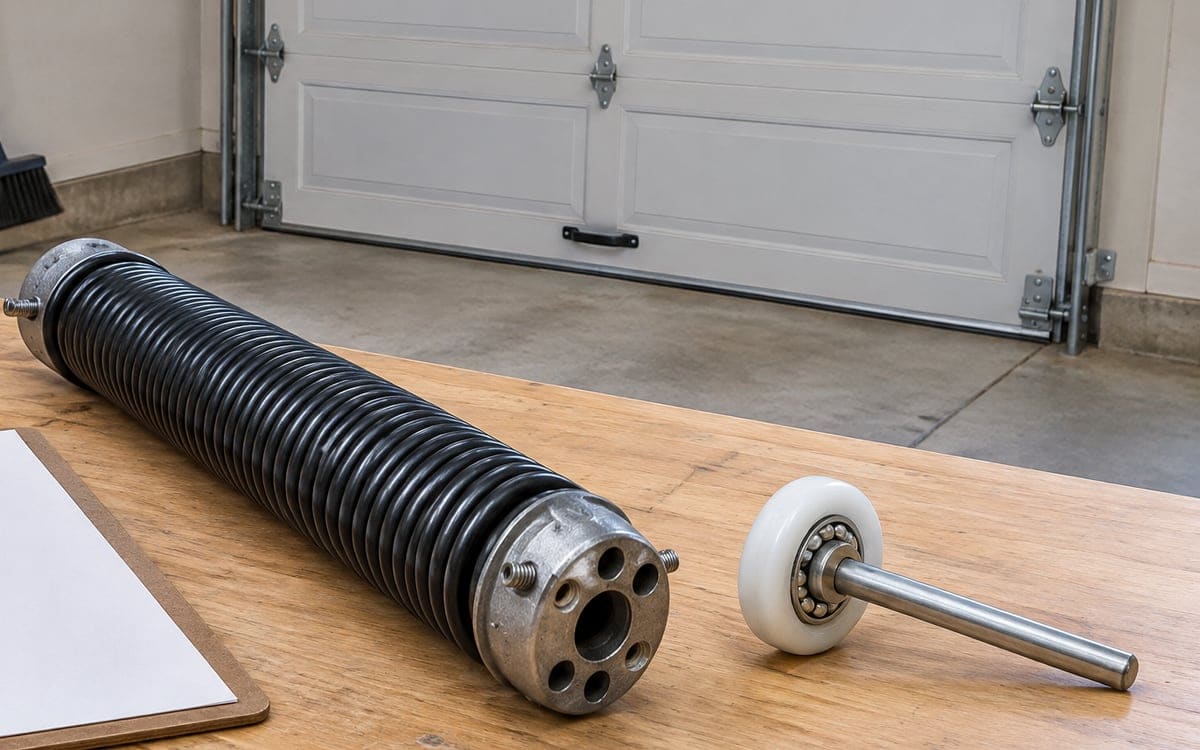
The single biggest driver is the part itself. A roller replacement, a spring replacement, a cable replacement, a panel replacement and an opener repair are not comparable jobs. Inside each of those there are grades. Nylon rollers with sealed bearings cost more than plastic ones with no bearings, and they last longer. A high-cycle torsion spring costs more than a standard one, and it does not need a return visit as soon. A steel-back opener with a battery backup and a smart module is not the same box as a bare chain drive from a shelf at the hardware store.
Door size, weight and material
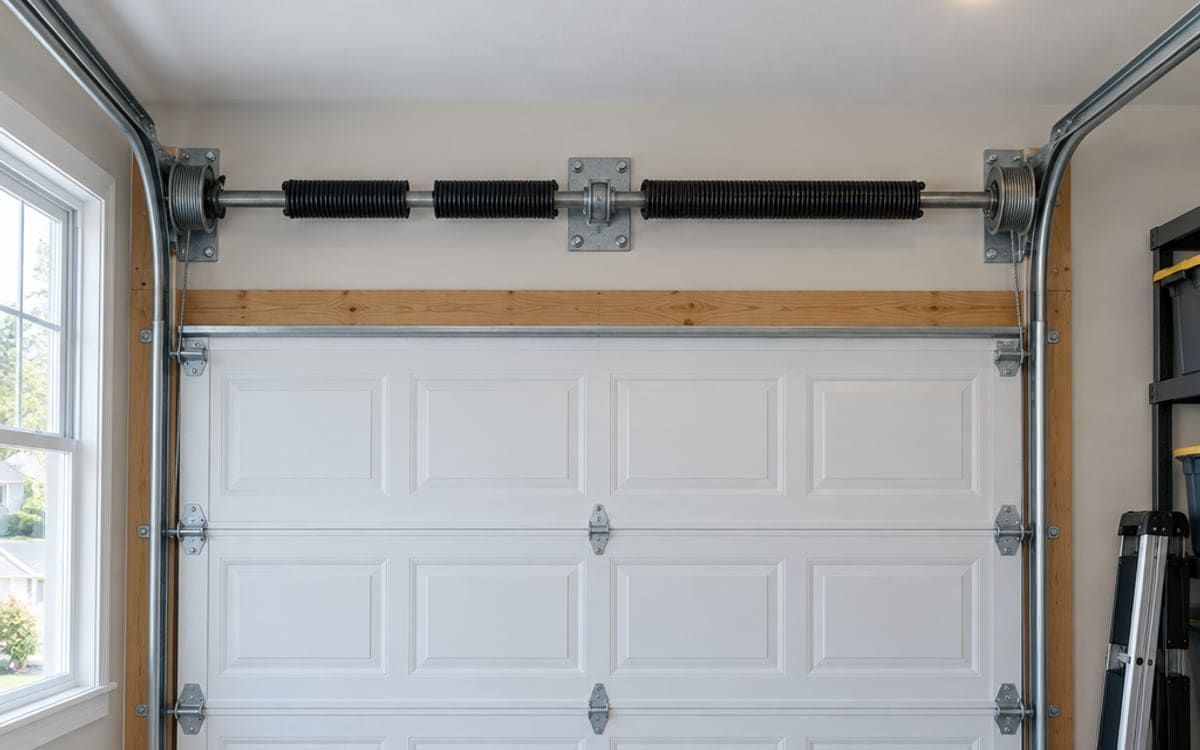
A one-car door is not a two-car door. Steel doors are heavier when they are wide and heavier again when they are insulated. Wood carriage doors are heavier still. The springs, cables, drums and bearings are sized to counterbalance the actual weight of your door, so a bigger door needs bigger hardware. Bigger hardware costs more, and the labor to fit it takes a little longer. When you compare two prices for a broken spring, the fair comparison holds the door size, weight and spring size steady. If one company priced a stock spring meant for a light door and another priced the right spring for your actual door, the numbers will not match, and the wrong-sized spring will fail early. Panel material shifts the figure too: a repair to a dented steel section is a different job from a repair on a wood panel, where matching the finish is often the harder part.
Springs: type, count and cycle rating
Two things swing the number on spring work. First, the type: torsion springs mounted on a shaft above the door price differently from extension springs stretched along the horizontal tracks. Torsion setups need drums, bearings and a shaft. Extension setups need pulleys, cables and safety cables running through the spring. Second, the cycle rating: a spring is rated for how many times the door opens and closes before the metal fatigues and lets go. Standard grades cost less today. Higher grades cost more today and push the next repair years further out. On a family that opens the door many times a day, the cycle rating sets how long before the next call.
Doing both sides at once
Torsion springs come in pairs on most double doors. If one spring is broken and the other is the same age with the same cycle count, the intact one is close to failure too. Replacing both at the same visit costs less than two separate visits, because the shaft is already set up for the work. The single-spring price looks smaller on paper, but it leaves the second spring on the clock. A company that priced only the broken side without saying anything about the other spring is either ignoring the age of the intact spring or counting on a second trip in a few months. Ask for both numbers and decide with the whole picture in front of you.
Access, age and what else is worn
The technician's time on your door depends on more than the failed part. A door that is easy to reach, with a clear ceiling and no stored belongings under the tracks, works faster than a door with bikes, shelves and a parked car in the way. An older door may have hardware that has to be freed with penetrating oil before it will move. On a door where the rollers, hinges, cables and bearings are all near the end, we may recommend replacing more than the one thing that broke, because the labor to get in there is already paid for and the next failure is close. A written price that ignores worn rollers and a cable fraying next to a broken spring may look cheaper today and cost more before the year is out.
What a written quote should list
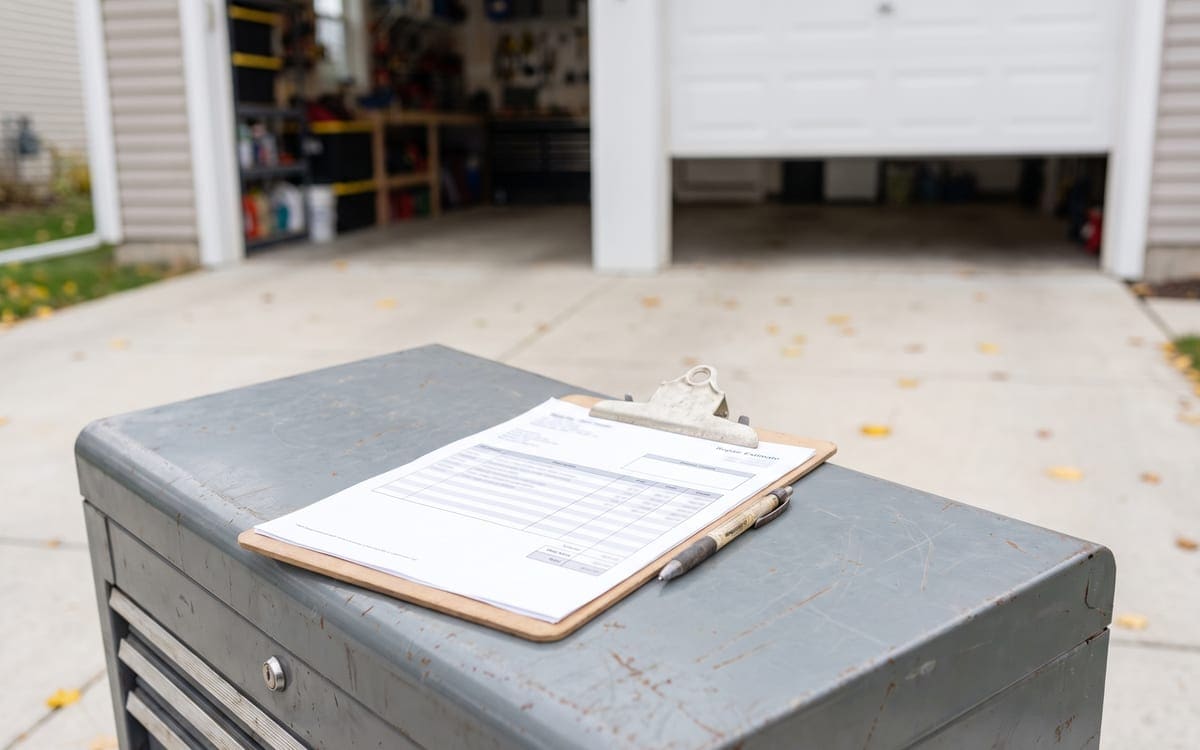
A written quote on paper protects both sides. It should list the specific part being replaced with a description of its grade, the labor line, the tax, the total, and the name and address of the company writing it. It should say whether the price covers both springs or one. Any change to the number during the job should be written down before it happens. On a full replacement, the paper should also list the door model, panel style, color, insulation grade, window layout, opener model and any extras. If you are shopping a full change rather than a repair, new door pricing factors are a longer conversation about door construction and the opener you pair with it.
What Illinois law requires on bigger jobs
Illinois has a home repair statute that shapes what has to be on paper above a threshold. The Illinois Home Repair and Remodeling Act applies to work on garages, though small maintenance, service or repair jobs below a statutory floor fall outside its reach.1 Above that line, the rules pick up. Illinois law requires a written contract or work order on larger home repair jobs, stating the total cost, including parts and materials, and the contractor's business name and address.1 The same statute requires contractors to give the customer the "Home Repair: Know Your Consumer Rights" pamphlet, with the customer signing an acknowledgment that they received it on contracts above the threshold.1 Illinois also requires home repair contractors to carry minimum liability insurance unless their net worth meets a level the statute names.1 If a job on your door clears the statute threshold, ask for the paperwork the law names. Any residential contractor working legally in Illinois has it ready.
Red flags in a price
Two patterns to watch for: a company that will not put a price on paper before starting the job, and one that offers to knock down or refund the deductible on an insurance claim. On that second pattern, Illinois is clear. The state statute bars a home repair contractor from advertising or promising to pay or rebate any part of a customer's insurance deductible to win a job.1 If that offer shows up in a sales pitch, cross the company off the list. If you want to see when repair stops making sense on an older door, we lay that out separately, and checking the company behind the quote covers more on who you let onto the driveway.