What to leave alone until we get there
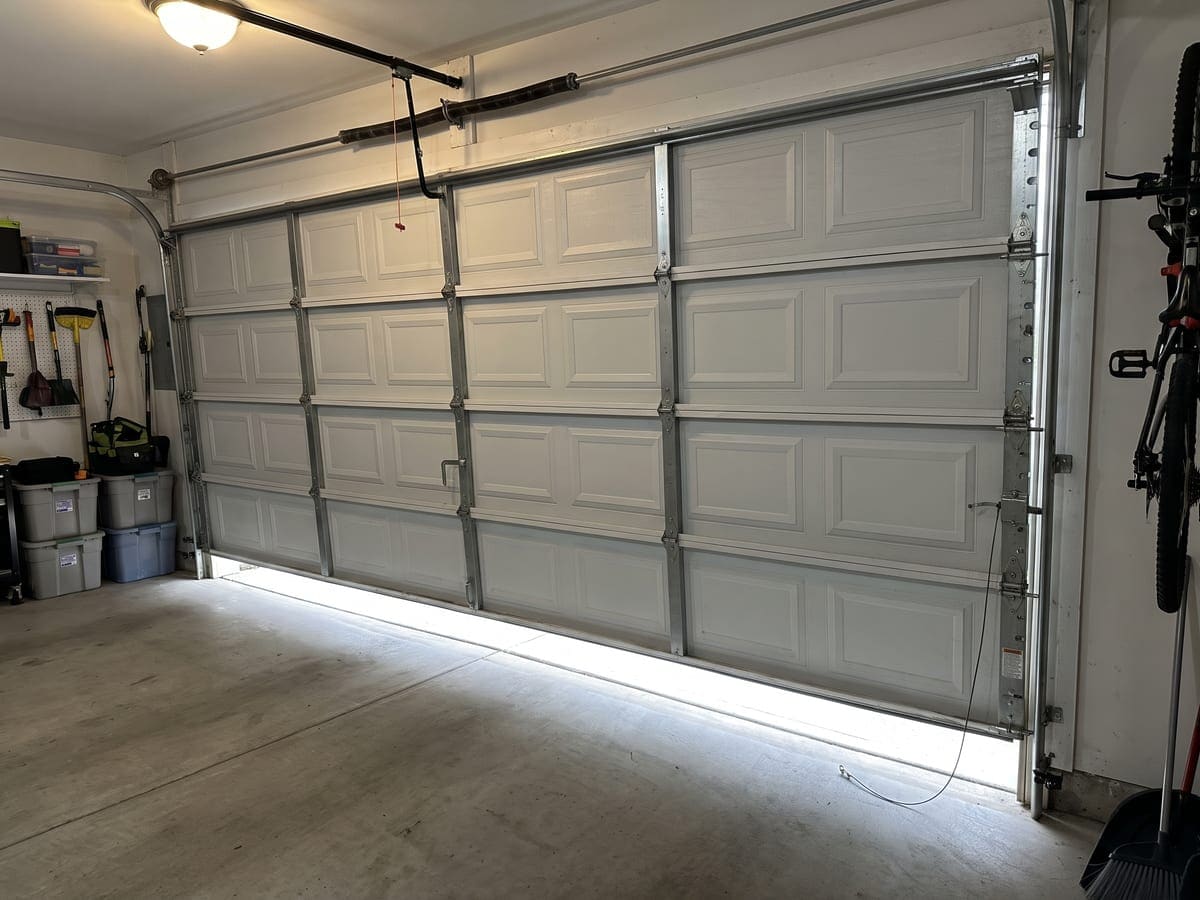
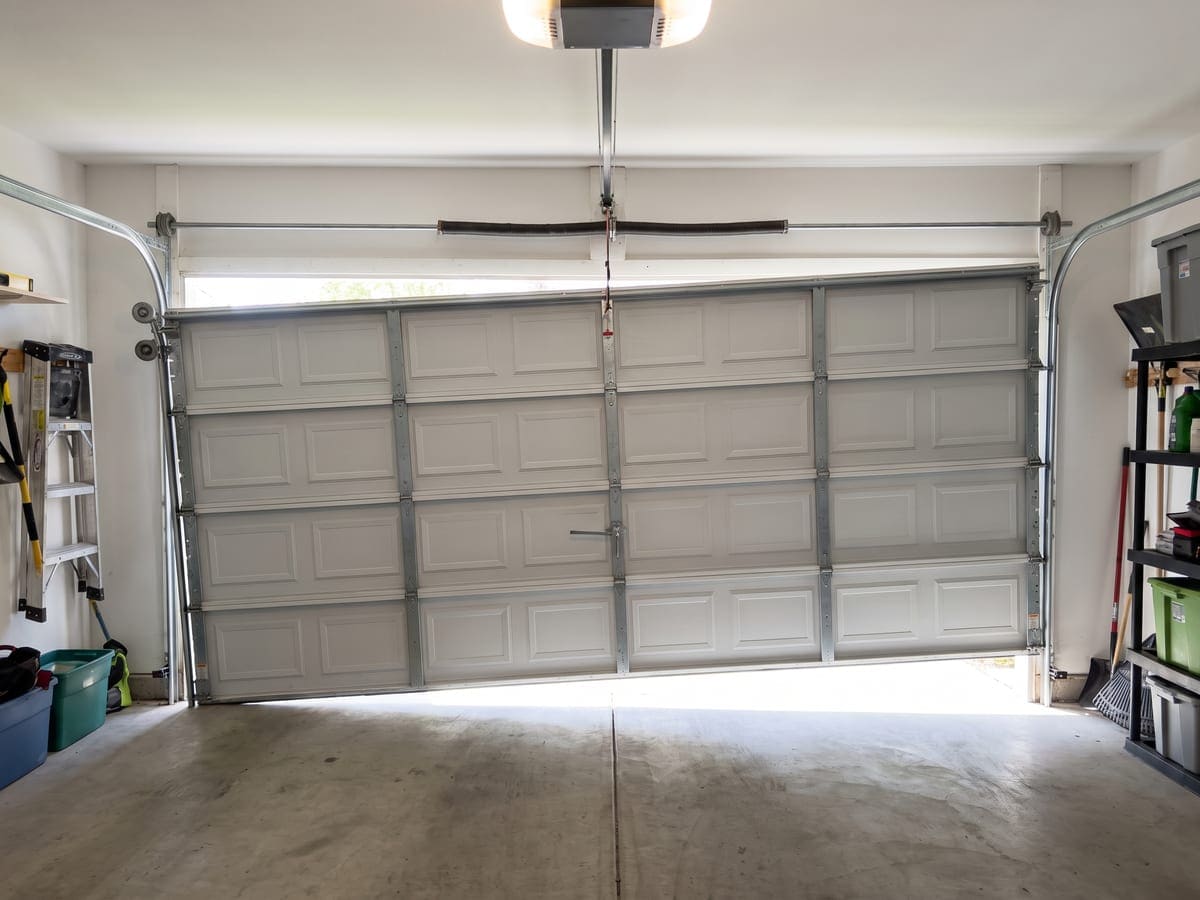
The door is now a heavy panel held in place by whatever survived: a strained cable, a row of rollers on the good side, or a section wedged against the frame. Any of those can give without warning.
1. Cut power at the breaker, not by walking under the door
Kill the garage breaker at the electrical panel. That is safer than reaching for the ceiling outlet, because on many garages the outlet sits above the opener, and the opener sits above where a raised or crooked door will be. Never walk under a door that is up or off level to reach a plug.
2. Move everyone back from the opening
Kids, dogs, cars, anyone. A door that stopped partway through a lift can come down from that height, and a door twisted onto one side can bind further with any bump.
3. Do not touch the red-handled release cord
The cord hanging from the trolley is meant for lifting the door by hand during a power outage. On a door caught partway open with a failure below, that same cord is what still ties the door to the opener. Unhook it and the door falls.
4. Do not try to guide the door back with your hands
Under load the door swings hard, the springs above are still wound, and fingers between a section and a jamb do not fare well when the door decides to move. Same rule for a car: do not try to drive one out from under a door that came off track. From a spot ten feet back, note which corner dropped, roughly how high the door was when it stopped, and whether any wire hangs loose at a bottom corner. That description helps the technician read the door on arrival.
Why doors leave their track
Causes line up like this:
- Vehicle bumps. A bumper catches a bottom section, the section bends, the rollers on that side pop out of the channel, and the door hangs from what is left.
- Loose track hardware. Lag screws work out of old wood, a flag bracket bends, or a section of vertical track walks sideways, and any small bump then finishes the job.
- Worn rollers. A cracked nylon wheel, a bent stem or a seized bearing rides up over the lip of the channel and drops.
- An object caught under a closing door. If the opener's close force is set high, it can push through until a section buckles and the wheels exit at the buckle.
Two bigger failures lead to the same end. When a lift cable lets go, that corner comes down first and the rollers there leave the channel as the panels twist. When a spring gives, the drums no longer hold the cables under tension, both cables can go slack, and the next lift throws a wheel out of the run.
Reading a door that has come off
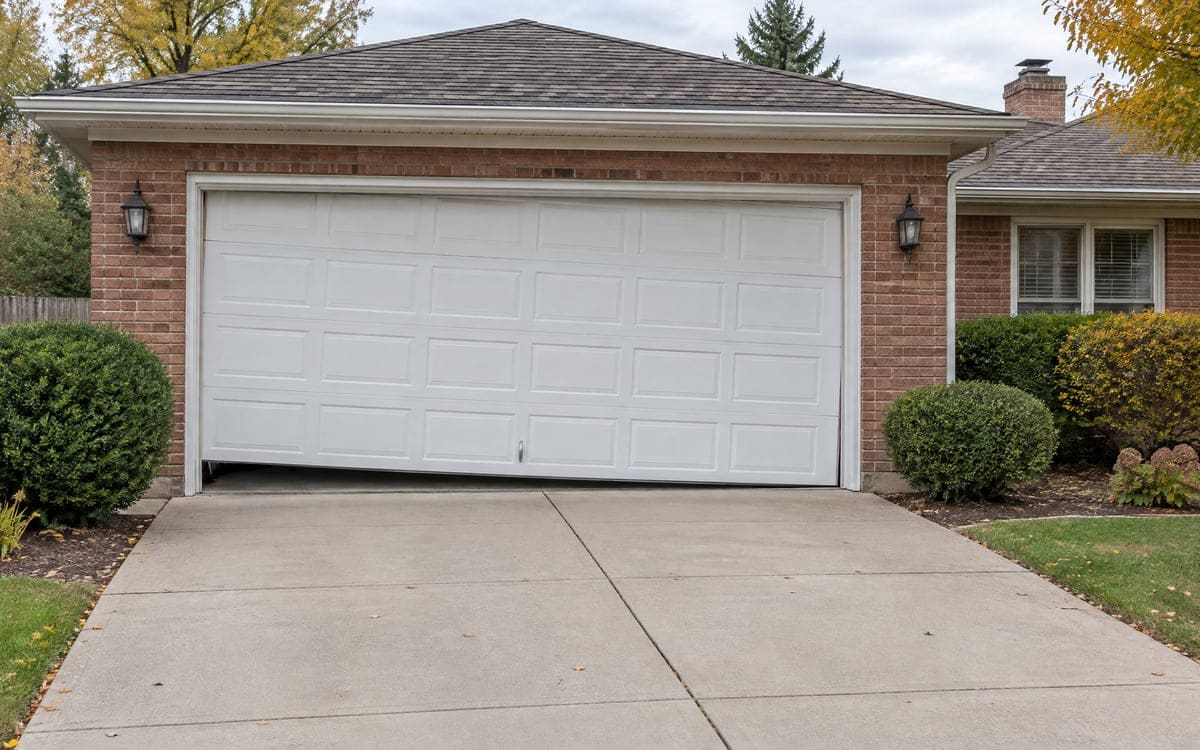
| Symptom | Likely cause | What it usually needs |
|---|---|---|
| One bottom corner on the floor, the other at height | A snapped lift cable on the low side | New cables in a matched pair, spring check, reset |
| Rollers out at the top of a vertical run | A flag bracket bent, or a run of track walked from the jamb | Fresh lags, bracket set true, wheels seated |
| Door jammed halfway with a folded bottom section | A vehicle bump, or the opener pushed through an obstruction | Straighten or swap the section, new hinges, reset |
| Slack wire on one side, door hanging crooked | A cable jumped its drum after the door bound and dropped | Reseat the cable at the drum, check the spring, retest |
| A single wheel wobbling out a few feet up | A cracked roller or a seized bearing on that wheel | New rollers as a full set, hinge check |
If more than one of those has happened at once, the visit steadies the door first and then works through the failed parts in turn.
Reset, straighten or swap
An off-track visit can combine a reset with a few parts. What tips the job one way is the state of the track and the sections.
When a reset puts it back in service
Track is straight, brackets are sound, panels are not folded, rollers are in decent shape. A cable jumped off a drum, or a bump popped a wheel out without creasing the door. We support the door, seat the rollers back in the channel, reseat the cable, check both drums and both springs, then run the door by hand and with the opener.
When bent parts have to come off
A run of vertical track is kinked, a flag bracket is bent past use, or a bottom section is creased through its strut. Pushing a folded run of track back to straight does not hold: the flat face never returns to true, and a wheel catches at the crease every cycle. A fresh section goes in, hinges get checked, and the door is set back onto parts that carry it evenly.
A reset, or new parts
A reset works on sound track and panels; bent or creased parts have to come out.
A reset
- The track is straight and the brackets sound
- Panels are not folded or racked
- A cable or wheel can go back into place
New parts
- A run of vertical track is kinked
- A flag bracket is bent past use
- A bottom section is creased through its strut
What the visit covers
Off-track work can involve nylon rollers in the common sizes, standard hinges, a set of lift cables, common drums, jamb and flag brackets, lag screws in a few lengths, and standard vertical track. Full door sections are matched to the make and model of the door and get ordered once we know what fits.