Repairs, openers and new doors in Arlington Heights
Garage door services in Arlington Heights, IL
Something on the door has changed and you are hunting for the page that answers it. The pages below group the work by what has happened to the door.
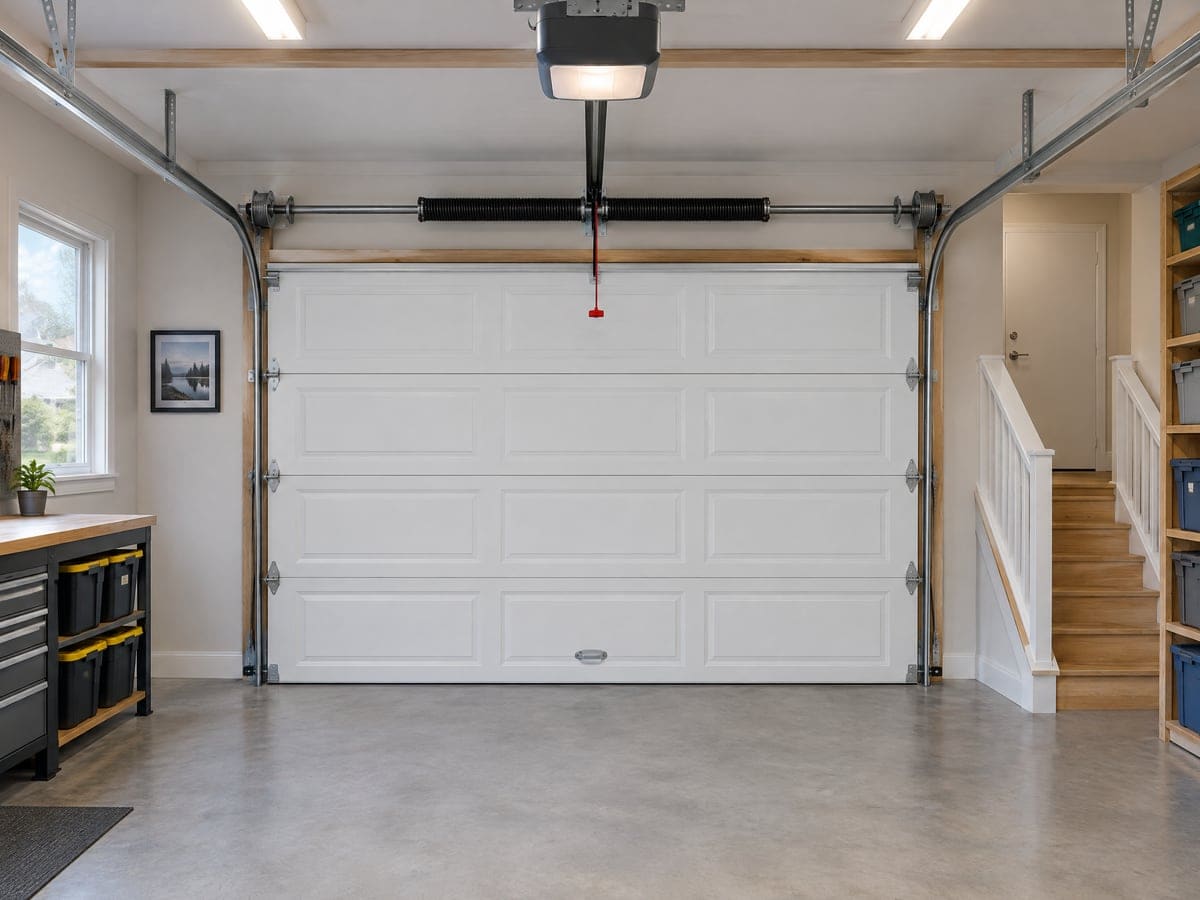
Which page do I need?
When something has just failed
- A car is trapped, a door will not come down, or a spring or cable has let go with the sections still in the air: emergency garage door repair focuses on staying out from under a door that could drop.
- A sharp report from the garage followed by a door that has gone heavy means a broken spring. Broken spring repair handles torsion and extension both, with why the opener strains as soon as a spring parts.
- A frayed strand at a bottom corner, a slack lift line, or a cable that jumped its drum sits under cable repair.
- A door hanging crooked with rollers out of the channel is one for off-track garage door repair. Do not run the opener against it.
- Door will not open or close is for a door that stops halfway, reverses on its way down, or refuses to budge at all.
- A door that has gotten worse over months without one clear failure is a general garage door repair job, which holds the full diagnosis from springs down through the safety sensors.
New doors and new openers
-
New garage door installation is for picking a door, weighing materials, insulation and window layout, and what install day looks like at your house.
-
The swap itself (tear out the old sections, size new tracks and springs to the new door, reconnect the opener) is on garage door replacement.
-
A new opener on its own, whether chain, belt or wall-mount, plus the balance check the door gets before a new head bolts up, is on opener installation.
-
A door that grinds or shudders as it lifts (flat spots on the wheels, cracked plastic, wobbling stems) points at roller repair.
-
A bent, dented or loose vertical or horizontal track, plus the jamb brackets that hold each one, is on track repair.
-
One dented or cracked section when the rest of the door is sound and the model is still made goes to panel replacement.
-
Gears, boards, sensors and remotes on the unit already on the ceiling are on opener repair.
-
Noisy garage door repair sorts squeals, grinds, pops and rattles by what each sound tends to point at.
-
Tune-up and safety inspection is the yearly service: lubrication, a hardware pass, the balance test, and the reversal test.
If you cannot tell what failed
A door that will not move looks the same from your side whether the spring, the cable, or the opener quit. Phone us from well back on the driveway or from inside the house, and tell us what you see.
What to have ready when you phone
A short list of details helps the call.
- The noise the door made when it quit, if any, and whether that noise carried into the house.
- Where the door stopped, and whether it holds that spot or drifts.
- Whether the opener runs at all, and whether the wall button and the remote behave the same way.
- Whether the emergency release has already been pulled, and what happened when it was.
- Rough age of the door and the opener, and the make on the opener label if you can read it.
What to leave alone
Some parts of a garage door hold stored energy, and taking one apart without the right tools can hurt someone or wreck the door.
- Torsion springs and the winding cones, along with any attempt to unwind, loosen, or swap one out, even a spring that has already snapped. Torsion springs sit under the most tension with the door closed and shed that tension gradually as the door lifts.
- Extension springs and their safety cables, on doors that use them at the sides.
- Lift cables, cable drums, and the bottom brackets where cables anchor to the door.
- The emergency release cord on a door that is up in the air with a broken spring or cable. Pulling it lets the door drop.
Latch the passage door into the kitchen or mudroom, back pets and kids away from the opening, stay outside the swing of the door, and leave the rest until we arrive. Do not step under a raised door to reach the opener plug on the ceiling. If you need power off, use the breaker at the panel.
What every visit covers
We start with a look at the whole assembly: sections, hinges, rollers, tracks, cables, springs, the opener, and its safety sensors. That pass turns up the failure that brought us out, and anything close behind it that is easier to catch now than on a return trip.
Two safety tests follow on a door fit for them. The balance test says whether the springs still hold the door's weight. Our technician disconnects the opener with the door closed and lifts the door to about the middle of the opening; a balanced door holds where the technician sets it, and a door that drops or shoots up is not. The reversal test says whether the opener stops and backs off when something is in the way on a closing pass. Both tests are what the tune-up and safety inspection visit is built around.
Why garage doors in Arlington Heights wear the way they do
Village housing carries a median year built of 1974.1 Springs, cables, rollers and bearings all run on their own cycle counts rather than on the age of the home.
Chicago's normal seasonal snowfall of 38.4 inches2 means salt and slush show up at the garage opening every winter. Two reads that go deeper on this: how house age shows up in a door and what winter chemicals do to the hardware.
Village housing age and local winter numbers
The village's median year built, Chicago's normal seasonal snowfall and northern Illinois days at or below 32 degrees.
1974
median year built, village housing
Source: U.S. Census Bureau, ACS 2024 5-year, table B25035 (Median Year Structure Built)
38.4 in
normal Chicago seasonal snowfall
Source: National Weather Service Chicago, Seasonal Snowfall Totals for Chicago
140
northern Illinois days a year at or below 32 degrees
Source: Illinois State Climatologist, Climate of Illinois Narrative
Where we work
We work on residential garage doors in Arlington Heights. The Arlington Heights area page is the longer read on the village itself.
Picking the right service: common questions
What is the most common garage door repair?
Garage doors wear in several places. Springs do the lifting, and the maker rates each spring for a number of cycles, so a door with enough opens and closes behind it eventually reaches the end of its springs. Each lift cable anchors at the bottom corner of the door and winds onto a drum at the end of the torsion shaft, and a frayed or rusted strand is the usual tell on a cable. Rollers wear on the wheel edges and the stems, and opener parts wear on gears, boards and sensors.
The sound and state of the door narrow where to look:
- A sharp report from the garage followed by a door that has gone heavy points at a spring.
- One side rising ahead of the other is often a cable.
- Grinding on the way up is often the rollers.
- A motor humming with nothing moving is usually not the opener itself; it usually means the opener is straining against a door that has gone heavy from a broken spring or a parted cable, so stop pressing the button and call.
What if I pick the wrong service page?
It is not a problem. When you call, we go through what the door is doing and we match the fix to that regardless of which page you landed on. The service pages are organized to help you read, not to decide the visit on the phone.
Is a broken garage door an emergency?
That depends on what is broken and where the door landed. A door stuck open with a car behind it, a door that fell, or any door hanging on a snapped spring or cable is urgent. A door that still lifts but has gotten louder or stops short of the floor usually is not.
Is it cheaper to repair or replace a garage door?
A repair is cheaper on a sound door that lost one part. A new door usually comes out ahead when a section is cracked through or the model has gone out of production. The same tilt applies when repair bills have added up over the last few years.
Can I repair a garage door spring myself?
No. The spring on a two-car door holds enough stored force to injure anyone whose tool slips while it is wound. On a spring that has already snapped, do not pull the release and do not try to raise the door; both are unsafe once the counterweight is gone.
Which service page should I pick if the door is just loud?
Noisy garage door repair is the page for a door that still runs but has gotten loud. The pages for rollers, hinges and the opener each handle one of the parts that can make a door loud, and the yearly tune-up and safety inspection is the preventive version of the same visit.
Do you work on commercial doors or driveway gates?
No. We stick to residential garage doors.
Tell us what the door is doing
Ring (847) 440-3650 with a plain account of what changed and when.