
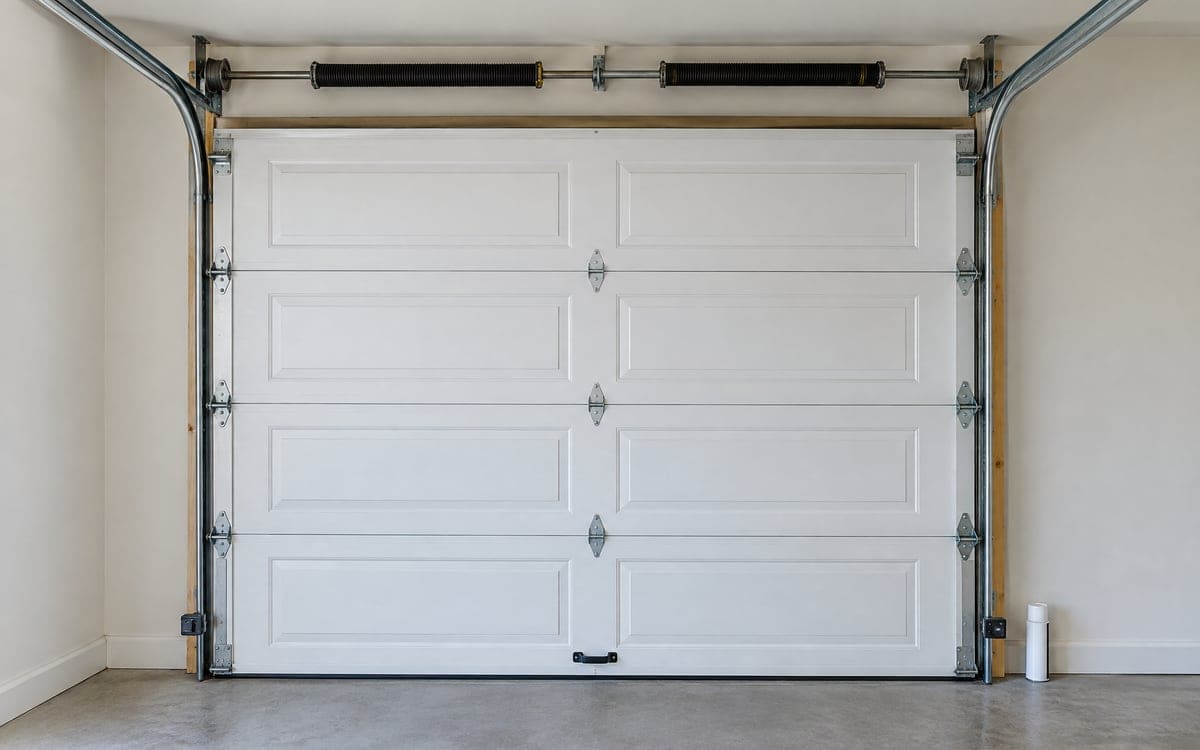
Lower hinges and the lower rollers take a light spray from the floor
The hinges are the metal plates bolted across every joint between sections of the door. They pivot a few times every open and close, and they pick up dust and grit from the driveway. A light shot of lubricant on each lower hinge pin, delivered from the floor with the door closed, is where a homeowner's can actually earns its keep.
The lower rollers, the little wheels on short stems at the bottom of each section, take the same treatment. From the floor, spray a short burst where each stem goes through the hinge bracket, so the lubricant runs down into the bearing on the inside end of the stem. A sheet of cardboard or a rag laid on the floor catches any drip. Keep hands away from the bottom bracket and the cable at the lower corner.
Everything above about chest height belongs to the technician: upper hinges, upper rollers, the top of the door, the curve of the track, and anything attached to the spring shaft. A homeowner on a stool is one slip away from loaded hardware, so those parts get taken care of during a tune-up instead.
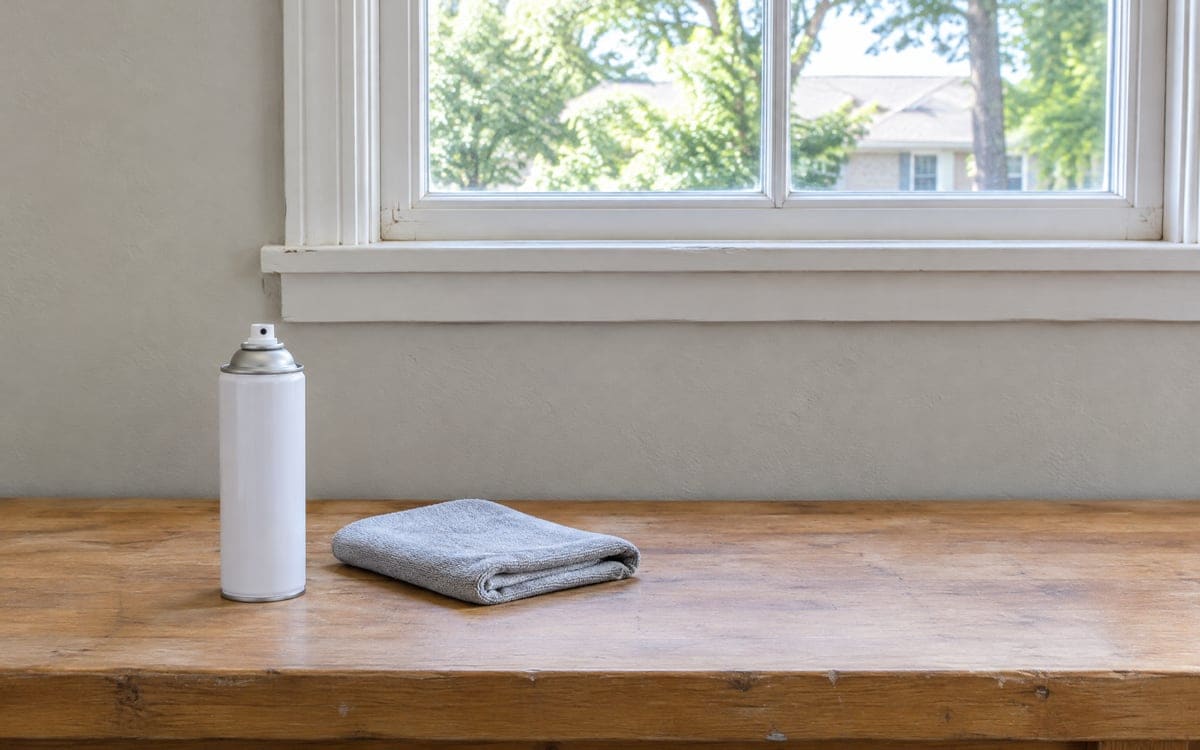
Leave the tracks dry
The vertical and horizontal steel tracks on each side of the door are not meant to carry grease. The bearing inside the roller does the turning; the track only guides the wheel. Spray on that surface collects dust, dog hair and road grit, and that mix wraps the roller stem until the wheel binds and the door jerks. Track cleaning gets done with a wipe from a ladder on a tune-up, where the stance and the reach are right for the overhead run.
If the roller still grinds after a hinge spray, the fix is a new roller, not more spray anywhere. We cover that under garage door roller repair.
The right product for a cold garage, and the ones that make a door worse
The product that works on a garage door in a cold climate is a lithium or silicone spray made for this job. Garage door lubricant on the shelf at a hardware store is usually one of those, labeled for garage doors specifically. White lithium grease garage door products are the second most common choice: thicker, longer lasting, and a little harder to apply because the thick cream tends to sling off a moving hinge until it works in. Silicone sprays are thinner, easier to apply from the floor, and friendlier to vinyl weather seals.
The question of silicone or lithium grease for garage door hinges comes up because both work. In Arlington Heights, the deciding factor is cold. The normal January mean at the O'Hare station is 25.2 degrees,1 and the coldest January on record, January 1977, had a mean temperature of 10.1 degrees.1 A silicone spray stays liquid at those temperatures. A thicker lithium product on a hinge pin can stiffen into something closer to wax.
What never belongs on a garage door:
- General-purpose penetrating sprays. These are solvents more than lubricants. They clean a hinge, then evaporate and leave the pin dry.
- Household oil, cooking oil or any kind of petroleum grease pulled off a shop shelf. These attract dust, which turns the hinge into a scratchy joint.
- Motor oil. Same problem, plus the drip.
- Any product with graphite dust. Fine for a door lock, bad for a hinge.
Springs, cables and the top of the door are ours to handle
The torsion springs across the top of the door and the lift cables that run from the bottom brackets up to the drums at each end of the spring shaft hold the full weight of the door, by design, every minute of every day. Springs, cables, drums, bottom brackets, the emergency release and the top of the door all belong on a visit, not under a stepladder with a can.
The coils get a proper wipe during a tune-up or a spring repair visit, and the cables get touched during a cable repair. If a wire frays, a coil separates, or a cable looks like it is coming unseated at the drum, stop using the door and call. Do not reach up with a can.
Why the wrong product makes an Arlington Heights winter door louder
A hinge pin that was sprayed with a general-purpose penetrant in September is dry by Thanksgiving. By January it is dry metal on dry metal, and the squeal comes back worse than before because the solvent took the old grease with it when it left.
A roller stem packed with household oil through a hot summer is a block of thickened sludge by the first cold snap. The stem turns against the sludge instead of against clean bearing surfaces, and the door jerks on the way up. That jerk is heard as a bang on the floor, and the opener works harder, which shortens the life of the chain, belt or screw along the rail.
If the door is new to you and you do not know what the previous owner sprayed on it, assume it was the wrong thing. A tune-up to clean the tracks and a fresh light spray on the lower hinges fixes a lot of first-cold-day squeal. If it does not, that is a service question, not a product question.
When a tune-up does what a spray cannot
Lubricant covers the parts that pivot. A fall garage door tune-up and safety inspection is where the full set gets looked at: hinge wear, roller play, cable condition, drum setting, spring balance, opener force settings, safety reversal timing and the photo eyes down near the floor. If the door was already loud before the first spray of the season, it is already past the point a can can fix. Noisy garage door repair is the right call. A monthly habit of running the safety test catches the smaller problems that eventually become loud ones.
A short list to buy and skip
| Product | Where it goes | Why |
|---|---|---|
| Silicone spray made for garage doors | Lower hinge pins, lower roller stems, weather seals | Thin, cold-tolerant, kind to rubber and vinyl |
| White lithium grease spray | Lower hinge pins, lower roller stems | Thicker, longer lasting, slings until it works in |
| Any lubricant on the tracks | Nowhere; track cleaning is a tune-up job | A track that stays dry stays quiet |
| General-purpose penetrating sprays | Nowhere on the door | Cleans, does not lubricate; attracts dust after it dries |
| Household oil or motor oil | Nowhere on the door | Attracts grit, drips on the floor and the car |
| Spray grease on anything overhead | Nowhere a homeowner reaches | Overhead parts stay with the technician |