The checks, in order
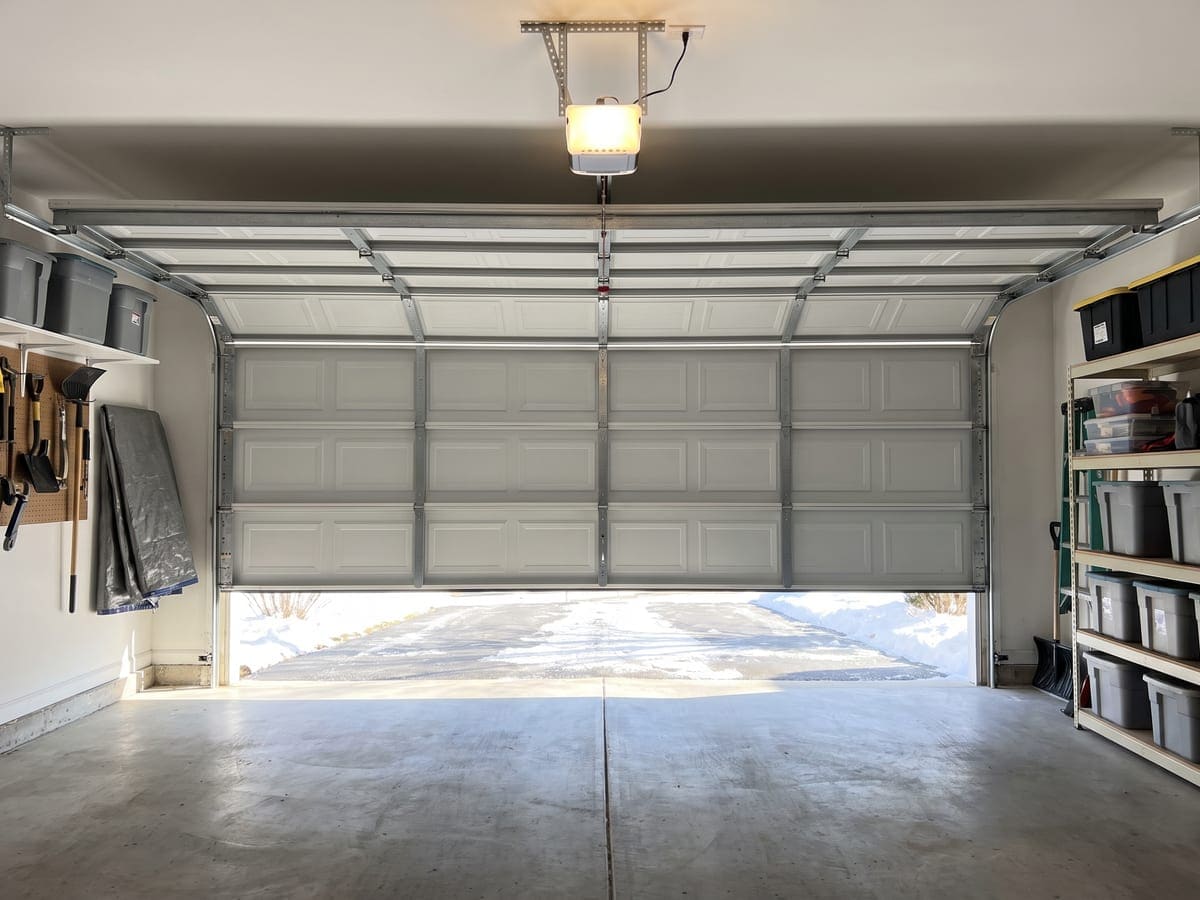
Most doors that will not run stop for one of a handful of reasons: no power, the wall lock, a sensor beam, a weak remote, an opener that lost the door, a spring, or a cable. The last two end the checks. If the door is halfway open and looks damaged, do not walk under it or reach for the ceiling plug. Keep everyone out of the garage and call.
1. Power to the opener
A silent opener has no power. Flip the garage breaker off and on at the electrical panel. Older garages often share a circuit with an outdoor GFCI, so a tripped patio outlet can take the opener down with it.
2. The wall lock and any manual slide bar
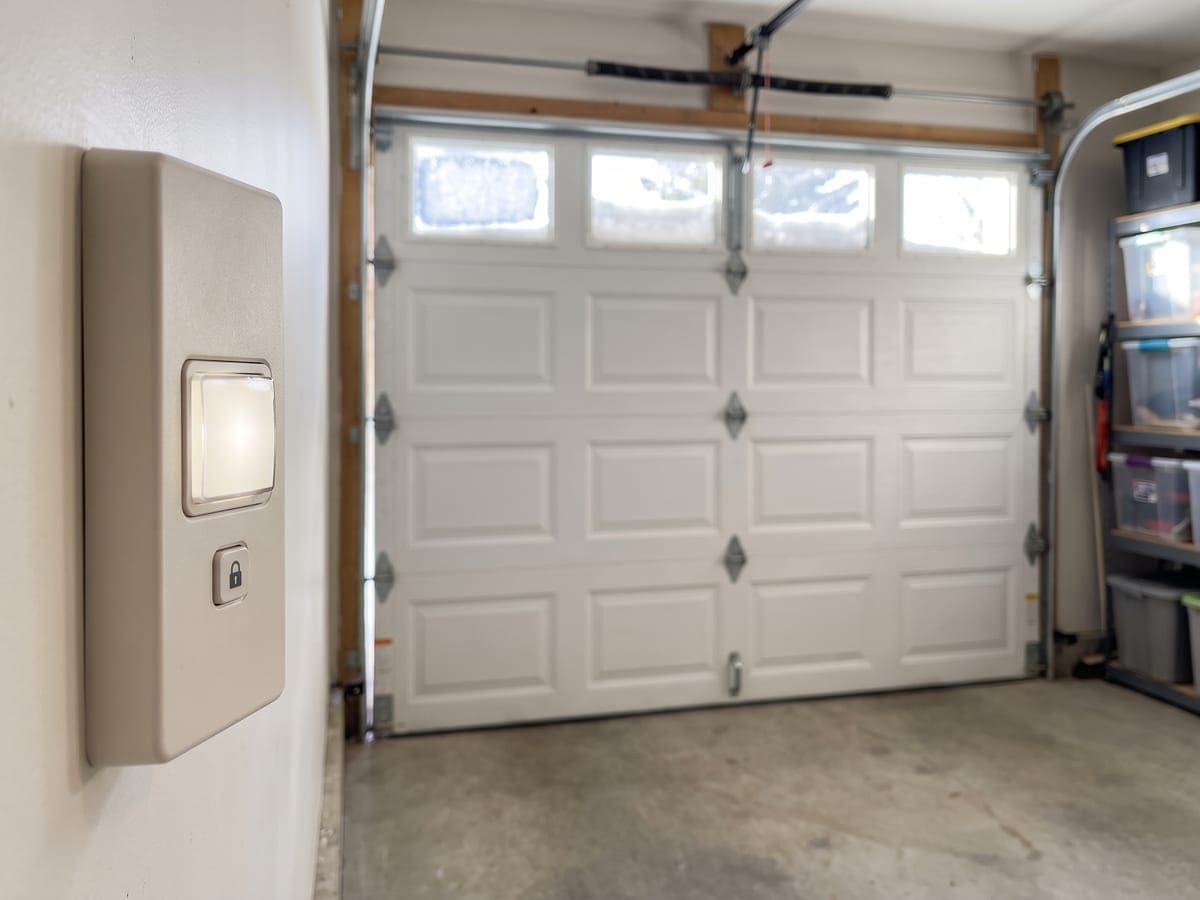
The wall panel has a small lock switch, sometimes labeled "vacation" or marked with a padlock. When it is on, the opener ignores remotes and keypads, but the wall button still runs the door. If the remote is dead and the wall button still works, hold the switch down until the indicator clears. Then check the door for a manual slide bar thrown into the vertical track.
3. Safety sensors and the low winter sun
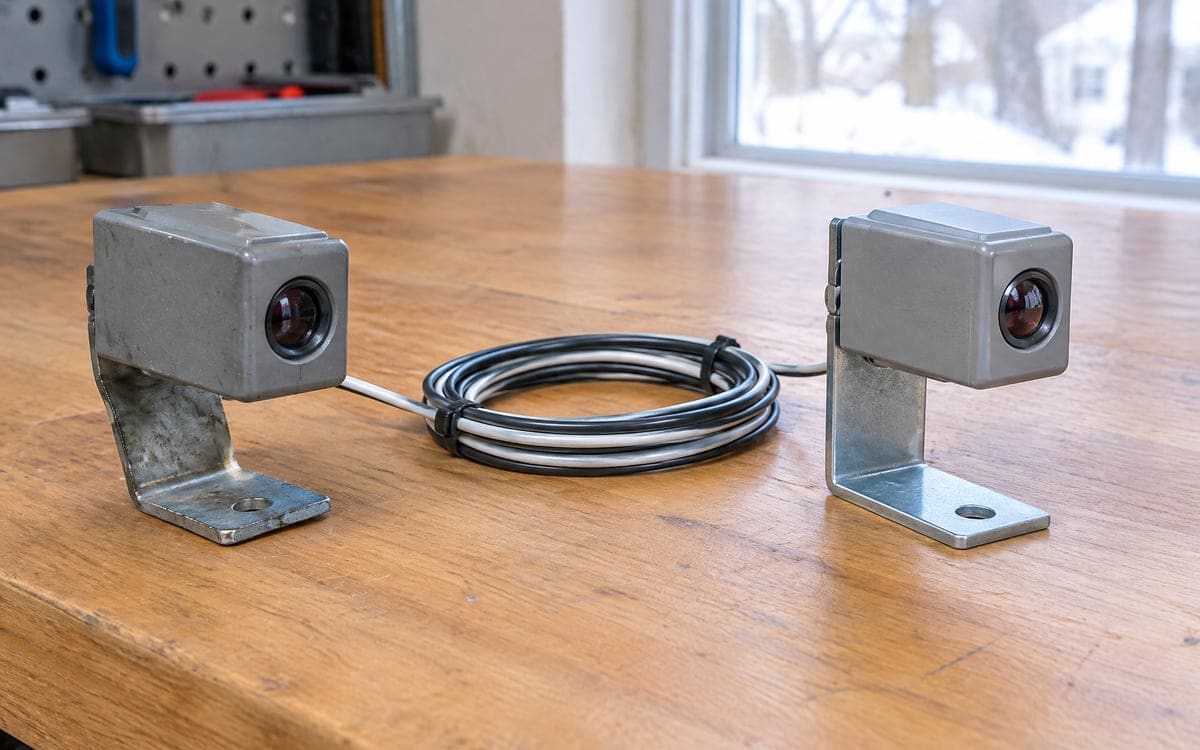
Two small eyes sit near the floor on each side of the opening. Both LEDs should glow steady when they face each other. A blinking indicator means the beam is broken, the sensors are cocked, or a lens is fogged. Clear anything in front of them, wipe the lenses, and twist each eye until both hold. In January the sun can shine straight into a lens; a scrap of cardboard over the housing sorts that out.
Where the safety sensors sit on the tracks
Two small photo eyes mount low on each vertical track and face each other across the opening, so the opener sees the beam only when the path is clear.
- Photo-eye on the left track
- Photo-eye on the right track aimed at the one across the opening
- Infrared beam between the two sensors the closing door breaks the beam if a pet or a bag is in the way
- Vertical track
- The door, up overhead
4. Remote versus wall button
Try the wall button. If pressing it runs the door while only the remote stays silent, the trouble is at the remote itself: a dead coin cell is the usual answer, or a code the head has lost. Swap the battery, then re-pair if a fresh cell does not fix it.
5. The opener runs but the door stays put
A motor that hums with nothing moving is most often an opener straining against a door that has gone heavy. A broken torsion spring or a snapped lift cable leaves the opener carrying the full weight. Look from the floor for a gap in the spring coil or a slack cable; if you see either, stop and call. The balance check is our technician's job on the visit. Only on a sound door do we look at a stripped drive gear or seized motor. A belt or chain that slides while the trolley coasts empty points at the release cord being pulled, with the door sitting on its springs. Both fall under opener repair.
6. Door starts to close, then goes back up
The opener carries the door a foot or so, then reverses. That reversal is the sensors or the force setting reading a problem. Common reasons are a sensor knocked out of true, a close force left too sensitive, or a roller catching a rough patch of track. If it still reverses, testing the sensors and reversal is the safety pass a technician will run.
7. Door closes only while you hold the button
A tap on the wall button does nothing, but press and hold and the door slides down. The opener cannot confirm the safety sensor beam and refuses to close hands-free by design. Along the sensor wire at floor level, look for a pinch under a shelf bracket or a spot chewed by a mouse.
8. Door has gone too heavy: stop right here
Signs the door is too heavy for the opener: a loud bang before it quit, a visible gap in the coil of a torsion spring above a closed door, or a lift cable hanging slack at a bottom corner. Torsion springs carry most of the force with the door closed and pass that lift to the panels through the cables. When either lets go, the opener is left to lift the door's full weight, which it cannot.
The fix is a spring that has snapped or a broken lift cable. Leave the red release cord alone. Do not try to lift the door by hand. A spring under load can hurt somebody badly, and an unbalanced door drops hard once free of the opener. Keep everyone out from under the opening and call (847) 440-3650.
9. Winter mornings and a seal glued to the slab
On a cold night the bottom gasket can bond to the concrete. The opener lifts, meets a door held fast, and either strains and stops or reverses. A short sideways push from inside the garage sometimes breaks it free. If the rubber tears, stop and call.
Symptom table
| Symptom | Likely cause | What it usually needs |
|---|---|---|
| Opener silent, nothing at the button | No power, tripped breaker or GFCI | Reset the breaker and any outdoor GFCI |
| Motor hums, nothing else moves | A broken torsion spring or a parted cable under a stalled opener, less often a stripped gear or seized motor | Spring and balance check first, then opener work |
| Chain slides, door stays put | Release pulled, trolley off the door | Spring check first, then a reconnect |
| Starts down, reverses back up | Sensor cocked, close force too sensitive, rough track | Sensor and force check |
| Closes only while held | Sensor beam not confirmed | Sensor alignment or a wire trace |
| Lifts crooked, jumps a rail | Cable off its drum, or a roller out | A door that came out of the track |
| Gap in the coil, or a slack cable | Broken torsion spring or parted lift cable | Matched spring set, or new cables and drums |
| Stuck open with a spring that gave way | Broken spring on an open door | A door that will not come down |
Fix now or replace later
When we repair it
Power trouble, sensors, remotes, a stripped opener gear, a pulled release, a frozen bottom seal and a single roller off the track are all repairs. So are a broken spring and a snapped cable on a straight door.
When we suggest a new opener or a new door
An opener that has stripped a gear twice, or a logic board dropping remote and sensor signals, is usually cheaper to replace than to keep patching. A door that has come off its track more than once, cracked along the top or bottom edges, or with rust eating through the bottom fixtures, is due for replacement.
What the visit covers
A visit for a door that will not run checks power, sensors, the remote and wall console, the opener, the springs, the cables and the balance. Depending on what has failed, the job can involve photo eye pairs, a gear kit, a trolley, nylon rollers, matched torsion springs, lift cables, drums, or a remote. Opener heads and door sections get ordered once we read the model number.
What the visit looks like
On the call, tell us what the door is doing and when it started. At the door, our technician switches off the opener and runs the checks without asking you to handle a heavy door.
When cold weather is doing it
Chicago's normal January mean sits at 25.2 degrees.1 See winter and garage door springs.