The strip profile and the retainer that holds it
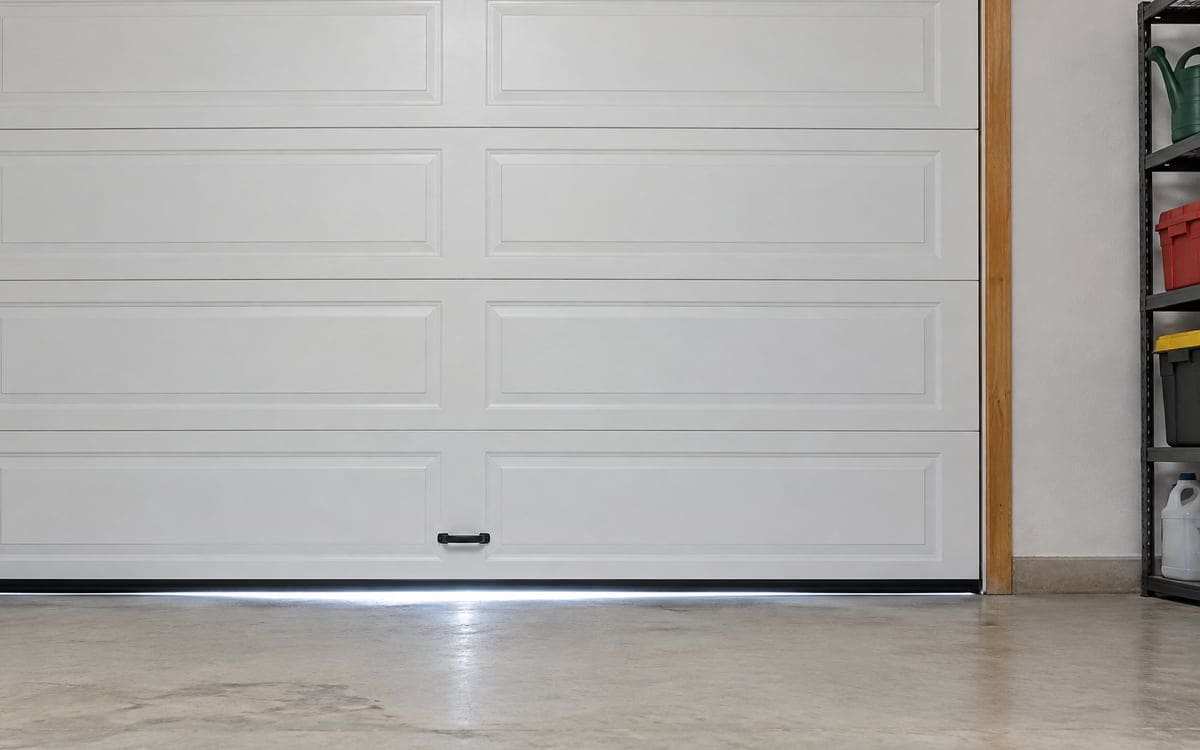
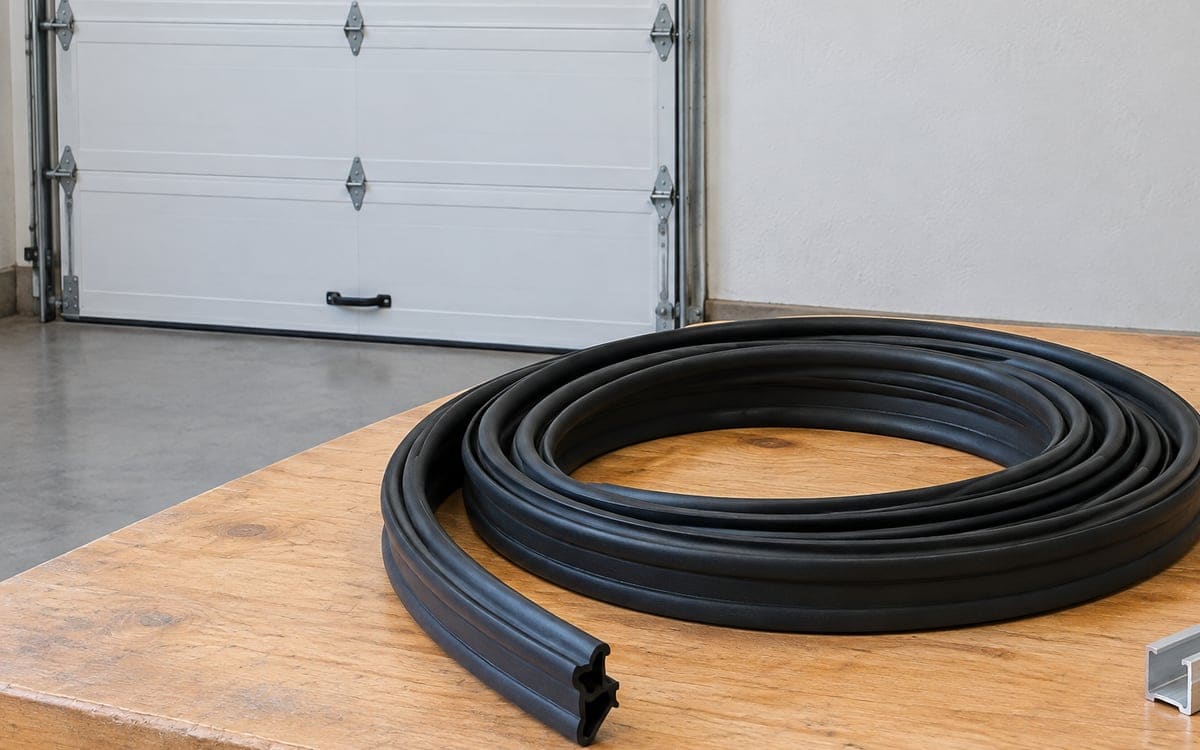
A garage door rubber seal is not one shape. The bottom edge of the door carries an aluminum retainer, usually two parallel channels running the full width. The retainer is screwed into the lowest section of the door and stays there for the life of the panel. The rubber strip itself slides in and out of those channels.
Almost every residential door uses one of three strip profiles. A bulb seal is a round rubber tube that collapses under the door's weight; it is the most forgiving for small gaps and sensible for a slab close to level with an even close. A T-shaped seal has a stem that locks into one channel and a wide flat landing that spreads across the floor, common on insulated steel doors. A P or J-shaped seal, like a J laid on its side, hooks over the retainer and is common on older doors with single-channel retainers.
The retainer decides which strip fits your door, so we match it on a visit. If the retainer has pulled out of plane or split along one edge, that gets swapped at the same time.
A quick check from inside the garage
Set a phone on the floor about three feet inside the door, aim it at the bottom edge, and take one photo with the garage light off and the sun up outside. That bright strip is the gap under the door. The shape of it tells us which fix the door needs: an even line all the way across, a heavier glow at one corner, or a stain that fingers in from one side. The companion piece on the three seals and where the leak hides covers the side stops and the top stop in the same session.
Uneven slabs and gaps at one end
A concrete slab is poured on dirt and dirt moves. Over twenty or thirty years the slab in front of a garage door can tilt a little toward the driveway, which leaves one corner of the opening lower than the other. A flat strip cannot bridge a slope.
Signs of a slab problem rather than a strip problem:
- Daylight at one corner only, usually the corner closer to the driveway or the one that gets the afternoon sun.
- A dark stain on the floor that fingers in from one end rather than a straight line across the width.
- Water tracking back toward the car instead of out onto the drive after a rain.
The fix at the door is a taller bulb seal, a step-cut strip or a scribed strip that follows the slope. For a slab that has tilted enough that a seal cannot cover it (an inch or more at one end), slab work is a separate job that is not part of the door; we will say so if the gap is beyond what a seal can realistically carry.
A separate case: a slab that is level but the door frame has shifted. On an older house the door frame can tilt a little when the garage walls settle, and the door closes with the bottom section at a slight angle to the floor. That is a frame job, not a seal job, and it shows up as a very even wedge of light rather than a bulge or a corner gap.
Mice follow the same gap
Field mice looking for a warm place in October find the gap the water uses in April. A quarter-inch of daylight is enough for a mouse. A fresh strip tall enough to meet an uneven slab is one of the moves a homeowner can plan at the garage before winter.
Water uses the same path. In fall the leaf drift along the driveway dams water against the door and sends it under the strip. In winter the drift is snow, and the pattern is the same.
When the bottom section itself needs work
If the lowest section of the door has been struck by a bumper, hit by a bike, or caught by a hockey stick on the way out, the retainer along the bottom edge may be bent, split or pushed back out of plane. A fresh rubber strip in a bent retainer leaks within a few weeks because the seat is no longer flat.
Signs that the bottom section itself is the problem:
- A visible dent, a split along the lower edge, or rust blooming where paint has been chipped.
- A seal that leaked right after it was installed, with no obvious slab issue.
- A wavy line of daylight along a floor that reads flat with a level.
- Rust streaks running down the inside face of the lower panel, or swelling along its lower edge, which both suggest water trapped inside the foam.
The fix is garage door panel replacement for a single damaged section, or full garage door repair if several things on the door are near the end of their life at once. If the panel is sound but the hardware above the bottom section is loose, roller play can throw the door off square and leave a gap even with a new strip, which is a tune-up finding before the seal goes on. On an older door with heavy winter chemistry under it, read the piece on road salt and garage door hardware before deciding on a seal-only visit.
What a bottom seal replacement involves
A bottom seal replacement needs a short parts list: a new strip in the profile and bead size the retainer calls for, a replacement retainer channel if the old aluminum is bent or split, and a feed lubricant that lets fresh rubber ride through the channel without tearing. The job itself is longer than the parts list. The door has to be opened to the right height and blocked so it cannot drop, and the strip gets fed in from the ends of the retainer, which sit at the lower corners of the panel. That setup, and the work at both lower corners, is the reason the strip swap is a visit job rather than a hardware-store afternoon.
The job does not touch the lift cables, the drums at each end of the spring shaft or the torsion springs across the top. Those stay where they are. A new strip changes nothing about the balance of the door, though we check the balance at the end of the visit, because a stiff fresh strip can briefly change the opener's close-force reading.
Before the first Arlington Heights snow
At the O'Hare station the normal first measurable snowfall comes on November 18.1 By early November the air is already cold, since the normal first autumn temperature of 32 degrees or lower lands on October 19.2 A tired seal already crushed by early November leaks the first time the snow sticks against it.
The practical calendar for an Arlington Heights garage:
- Before the normal first freeze around October 19: look under the door with the garage light off. Call for a visit if the daylight is wider than a pencil line.
- Before the normal first snowfall around November 18: have the strip fitted so snow does not set up against a tired seal.
- Through winter: watch for a new line of light at one corner after a thaw-freeze cycle. The piece on insulated garage doors is worth reading before any next-year door decisions.