Springs wear out by cycles
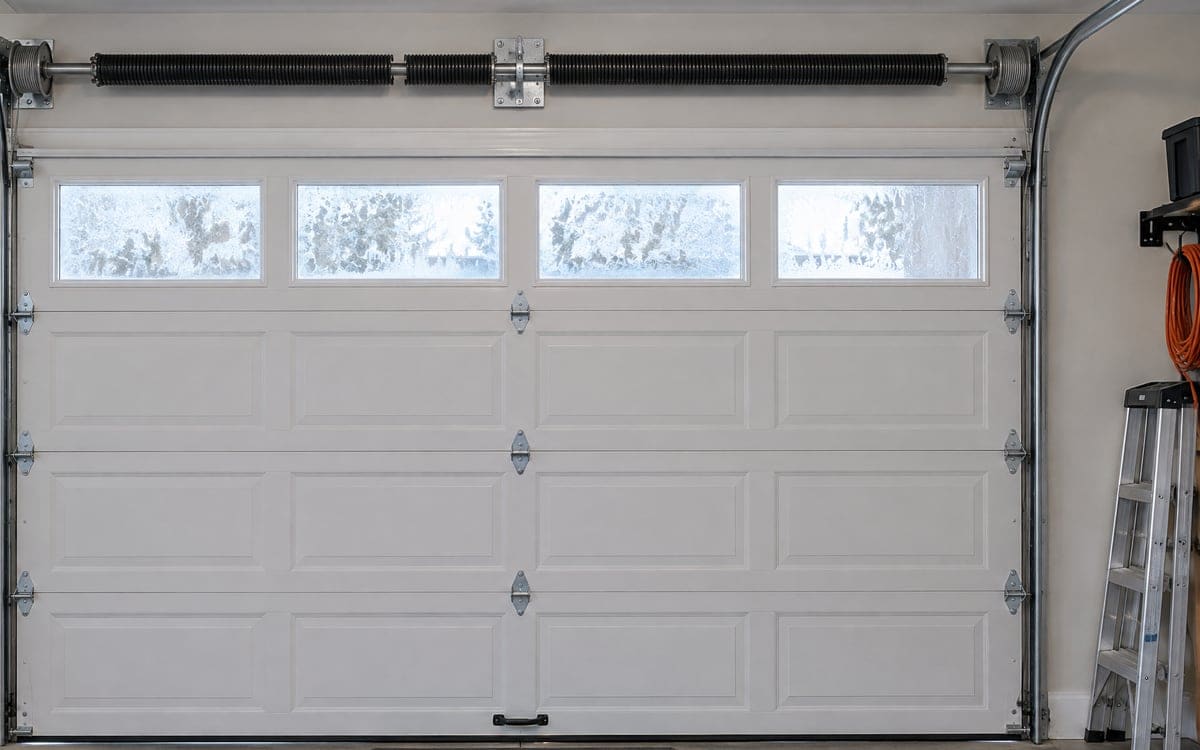
Every spring is built for a count that depends on its specification, and no spring lasts much past its own count no matter how it has been treated. A house with two openings a day uses the count slowly, while a garage that doubles as the main door in and out uses it fast.
The signs that the count is close to running out are in the coils themselves and in how the door moves.
What local winter temperatures look like
For a house here, winter is long and it is cold. The normal January mean temperature at Chicago is 25.2 degrees F.1 A full month averaged puts the daytime highs above that number and the overnight lows below it. Northern Illinois sees an average of 140 days a year at 32 degrees or lower and 16 at 0 degrees or lower.2
A garage door in Arlington Heights sees that weather from around the normal first freeze at Chicago O'Hare on October 193 through the normal last freeze on April 21.4 Nearly six months of the calendar carry the chance of a freezing morning. The coldest January on Chicago record was 1977, with a mean of 10.1 degrees F.1 Every moving part on the door feels those temperatures, from the opener's drive to the grease in the bearings.
The freeze and snow season a spring works through
The bands run from the normal first date to the normal last date in the record, not days that are all frozen or snowy.
- freeze season: Oct 19 to Apr 21
- measurable snow: Nov 18 to Apr 2
Sources: National Weather Service Chicago, Normal First Freeze Information; National Weather Service Chicago, Normal Date of Final Spring Freeze; National Weather Service Chicago, Snow Climatology.
Show the numbers behind this chart
| Date | What |
|---|---|
| October 19 | freeze season begins |
| April 21 | freeze season ends |
| November 18 | measurable snow begins |
| April 2 | measurable snow ends |
What a parted spring looks like
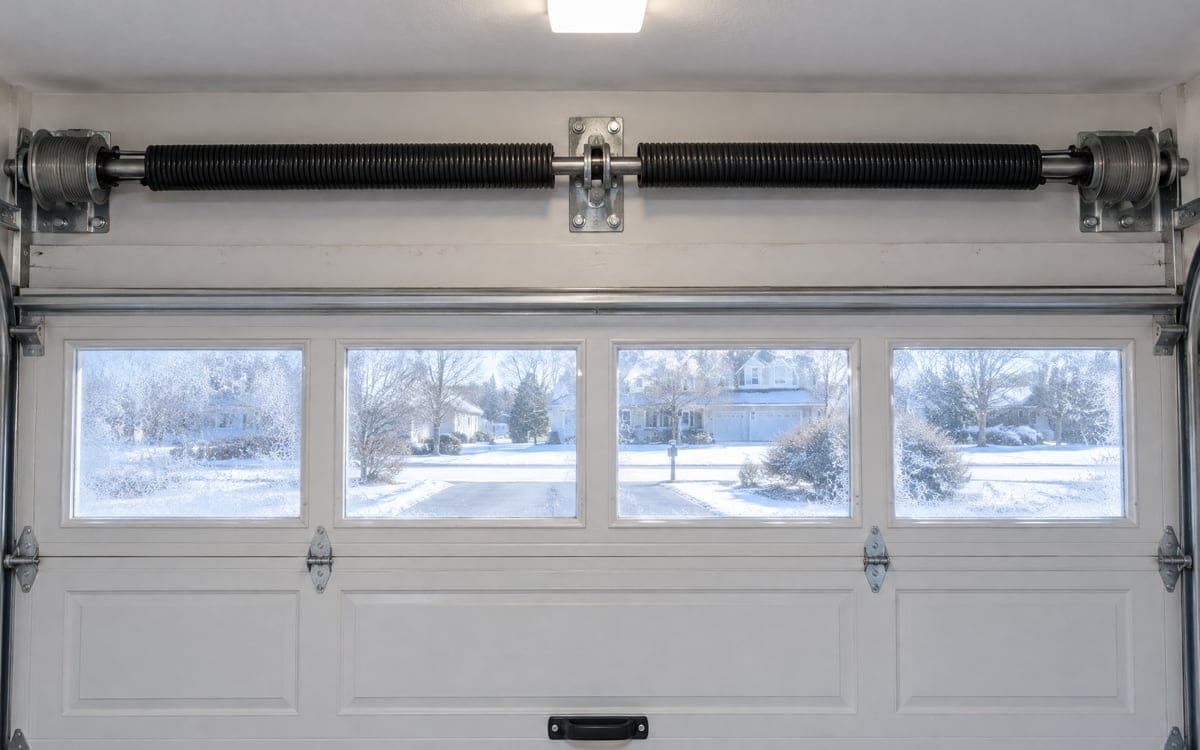
Micro-cracks that opened up over years of winding become the weak spots that give way first. On the wound side of the spring, tension sits highest at the same spots the fatigue has been building. When the spring finally parts, what is left on the shaft is a spring with a visible gap between two sections that used to be one continuous coil.
From the floor, the gap is the quickest way to confirm what you are looking at. A sound spring reads as a tight, even helix across its length; a broken one shows a visible space where the coils have separated. The spring stays on the shaft either way.
Why a spring on a wider door is a matched pair
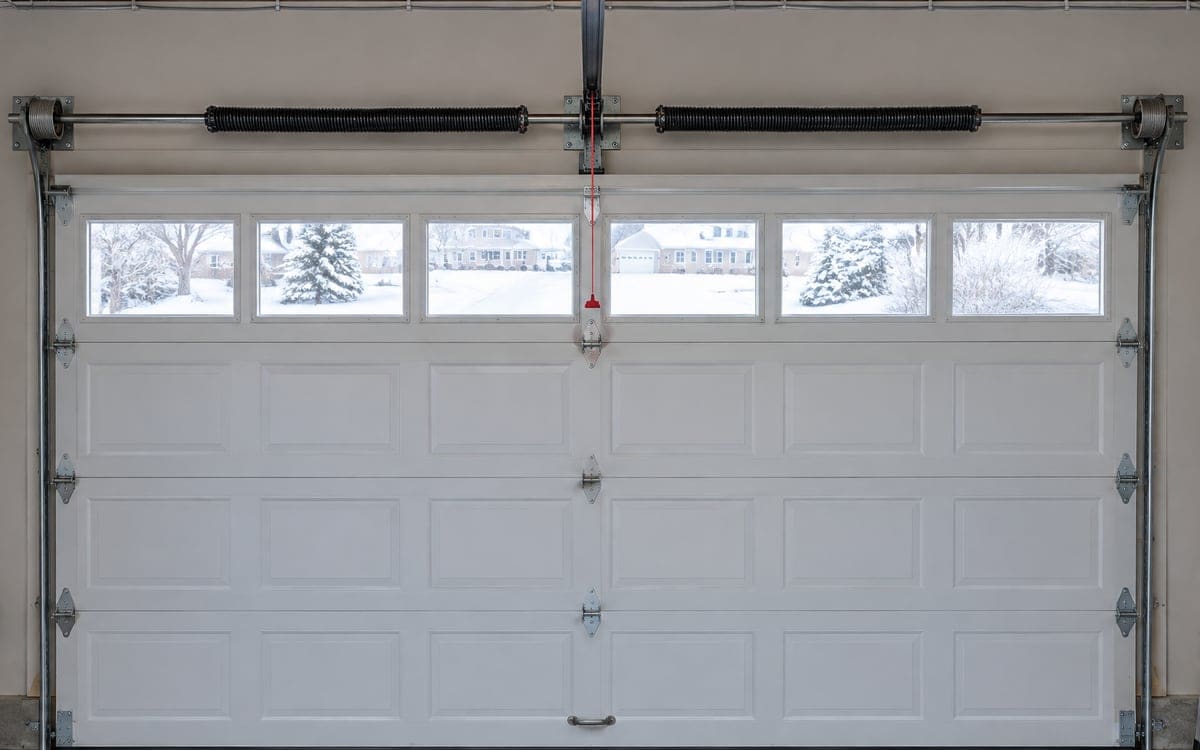
A single-car door often runs on one torsion spring. A standard two-car door runs on a matched pair, one on each side of a center cone on the shaft. The two springs share the lift evenly, so each spring on a pair is doing half the work.
The two were installed on the same day, have taken the same number of cycles, and have seen the same temperature range. Our spring repair visit swaps the pair rather than one spring, which matches two fresh springs to the same cycle count.
Why a spring failure looks sudden
Nobody counts cycles day to day. A spring, if you could see inside it, was headed toward failure already. The door was lifting fine the day before; the spring's rated count was close enough that one more lift was all it had left.
The opener hides a failing spring until it cannot
A garage door opener is not built to lift a door on its own. It moves a door the springs have already balanced. When the springs are healthy, they carry the door's whole weight through the travel, and the opener only pushes it along a track that gravity keeps working against. Nothing else in the assembly is lifting.
As the springs age, they lose torque a little at a time. The opener quietly picks up the slack. It works its motor harder, its chain or belt sees more tension, and the door still rises. Nothing looks wrong. Then one morning the springs cannot pull their share, the opener trips out on force, and the door either stops halfway or does not move at all.
If your opener has been straining lately and the door thumps at the bottom on the way down, get a fall tune-up on the calendar before the first freeze.
Signs a spring is near the end
A spring rarely fails without warning if you know what to look at. From inside the garage with the door closed, a healthy torsion spring is smoothly wound, with tight coils, and no rust on the surface beyond a light film. A tired spring shows gaps that vary along its length and pitting on the coils themselves. The door itself tells you too. Under the opener, it rises unevenly, faster on one side than the other. It slams the last few inches on close. The opener strains more than it used to on the way up.
| What you see or hear | What it usually means | What we do about it |
|---|---|---|
| Door rises unevenly, one side leading | Cables or springs out of balance | Rebalance and check both sides |
| Bang from the garage, door will not open | Torsion spring parted at a coil | Replace the spring, both if paired |
| Loud slam at the last few inches of close | Springs cannot hold the door's weight late in the stroke | Rebalance and often replace |
| Rust pitting on the coils themselves | Surface corrosion is weakening the wire | Replace before it snaps |
| Opener straining, then tripping out | Springs no longer carry their share | Balance and spring service |
For the home signs, the monthly visual and reversal checks cover the ones a homeowner can run safely. The balance check itself belongs on a technician visit: pulling the release on a door with a hidden spring or cable problem is how doors fall.
What a fall tune-up tells you
Fall is a sensible time to get a tune-up on the calendar. October is when the first freeze normally arrives at Chicago O'Hare, and a yearly visit before that date puts the balance check in before the first hard morning. The balance check is a technician step, not a homeowner one.
Matched pairs and higher cycle springs
A residential sectional door uses one of three spring arrangements: a single torsion spring, a matched pair of torsion springs on wider or heavier doors, or a pair of extension springs along the horizontal tracks. If one spring in a torsion pair has failed, the other one is not new. It turns the same shaft, has taken the same cycles, and has seen the same winters. When we come out for spring replacement on a matched pair, we replace both. Leaving the second spring means a second call before long.
Older houses matter here. The median year built for housing in Arlington Heights is 1974,5 and about 64 percent of Arlington Heights housing units were built before 1980.6 Cables that go with a broken spring share the load with the springs they ride beside.
Every spring is built for a specific count, suited to a door that gets a normal number of trips a day. A higher-cycle spring is available for the same door, built to last several times longer. It costs more up front and lasts proportionally longer. For a house with heavy in-and-out traffic, the higher-cycle option can be worth asking about.
What to do if it breaks on a cold morning
If you heard a bang from the garage and the door will not open, or opens a few inches and stops, leave it where it is and call. If the car is stuck inside, a spring that breaks with the car inside needs a technician, not a hand lift.
Call (847) 440-3650. Tell us what the door did, whether the car is stuck inside, and what you can hear now if you press the wall button.