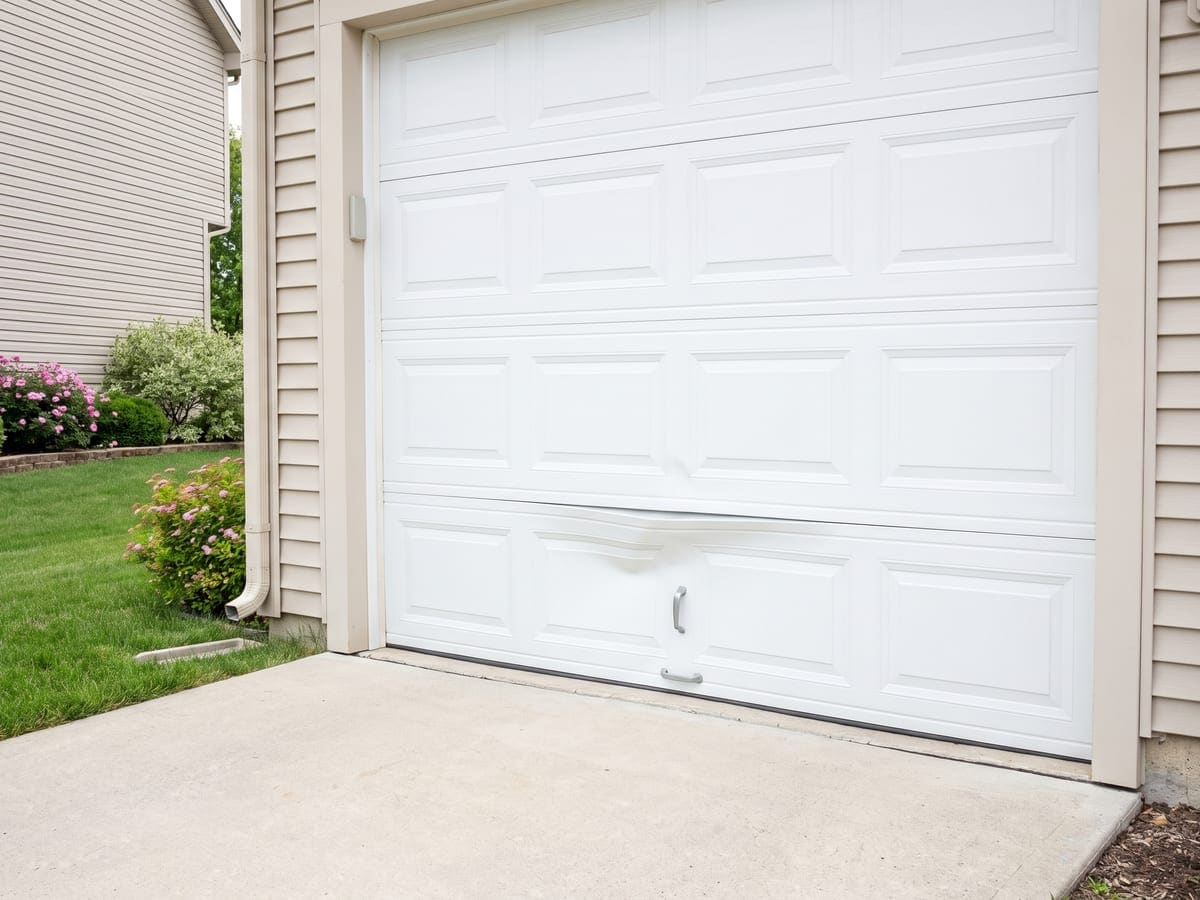
Sizing up the damage
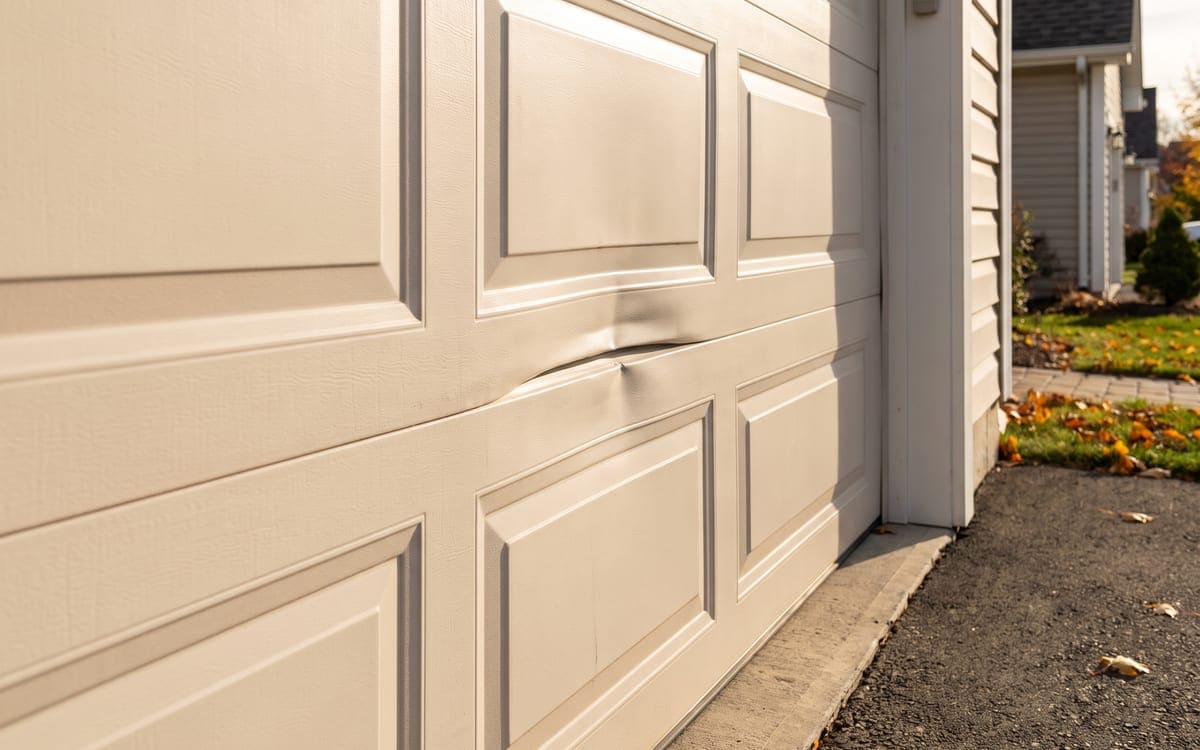
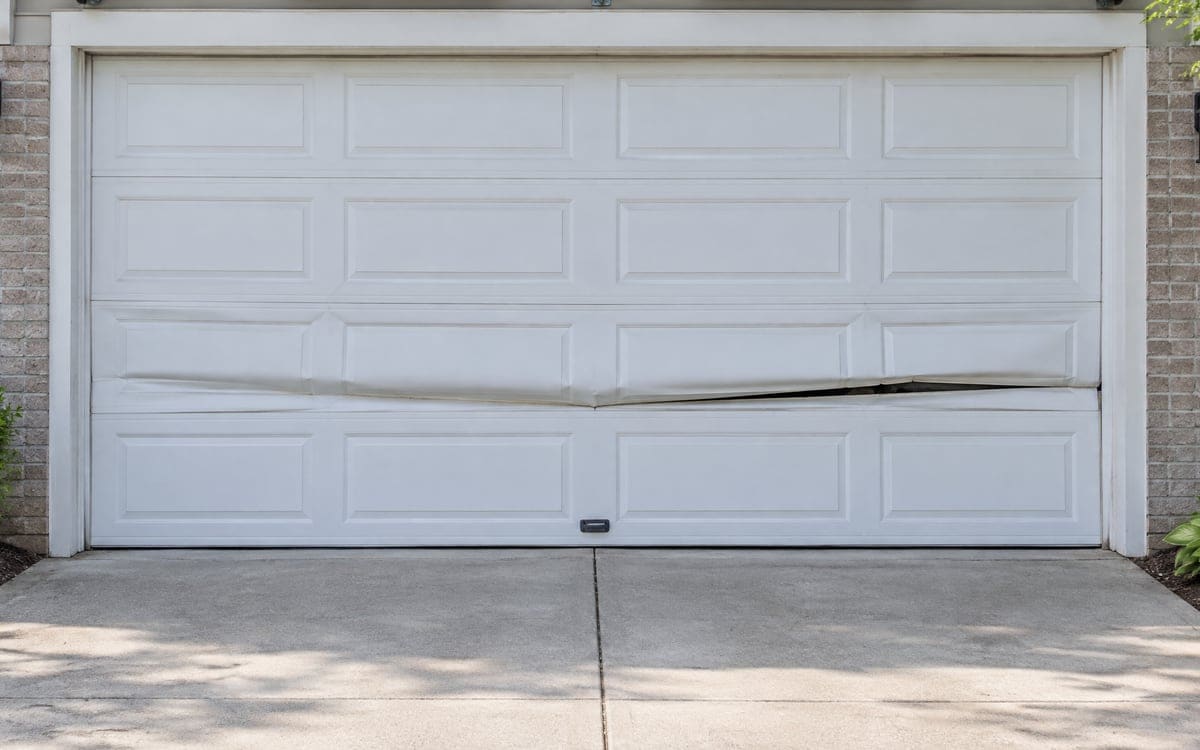
A driveway photo rarely tells the whole story on a damaged door. A dent that looks cosmetic in a phone camera can turn out to be a creased section that has bent a hinge, or a bumper strike that has racked a piece of vertical track. The visit walks the panel, the hardware around it, and a slow test run of the door itself before we take anything apart.
1. Watch how the door moves
Our technician runs the door slowly from a safe spot and watches. A section that binds where the crease is, or grinds at one side as it passes the impact point, points at the panel and the hardware around it. A door that feels heavy for the opener, drops harder than it should, or hangs unevenly at rest is a different story, and one the panel will not fix. On a torsion setup, two lift cables run from the bottom corners up to drums on the spring shaft, so the panels, the springs and the cables all share the same tension. If a spring parts or a cable slips its drum, the door will not lift, so we keep spring and cable work separate from the section work before quoting anything.
2. Check the hinges and section edges
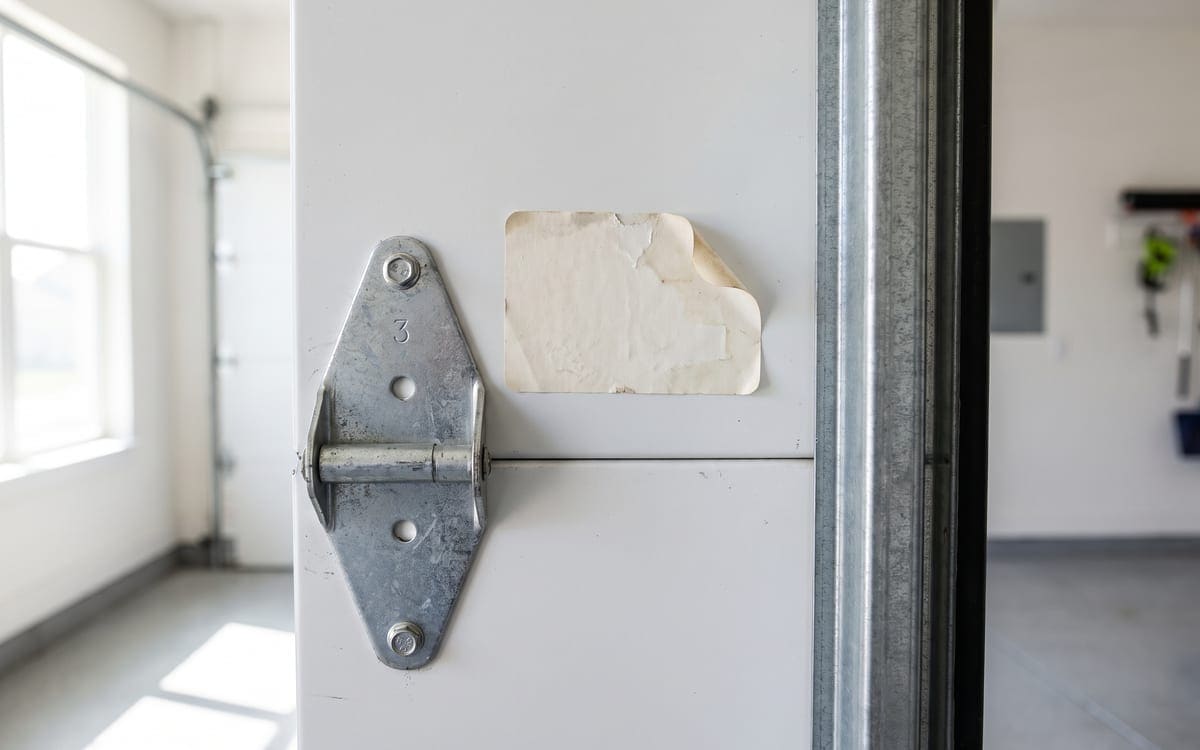
Each section is joined to the ones above and below by hinges along its edges. An impact that folds a panel also twists the hinge leaves and the screws holding them into the end stiles. Bent hinges are inexpensive parts, but they are what keeps a car-strike door from tracking right after a light pull-out. We flag every racked hinge, not only those at the damaged section.
3. Look for cracks at struts and end stiles
A steel section is stiffened by a top flange, a bottom flange, and, on wider doors, one or two horizontal struts across the back. Cracks along a flange, at a strut mount, or through the end stile change the job. A creased section that has cracked through the ends will not hold hinges again, so it goes. A dent that leaves flanges, struts, and stiles intact stays a candidate for a swap.
4. Find the manufacturer label and model
Inside the door, most often on the bottom section, doors carry a paper or foil label with the brand, model, series, and year. Our technician photographs it first, because a matched swap depends on the maker still building that panel in the same finish and window layout. On older doors the label has faded off, and the model has to be traced from the section profile and any hinge stampings.
5. Sight the track at the impact point
We sight down each vertical track from the floor. A bumper strike often pushes the track out of plumb at the height of the hit, and roller cups and jamb brackets can rack in the same moment. If that is not brought back to true before the new section goes in, the fresh panel binds and takes damage all over again. That is a separate check, covered on our page for a track bent by the same bump.
What each kind of damage usually needs
| Symptom | Likely cause | What it usually needs |
|---|---|---|
| Cosmetic dent, no hinge or track damage | A ball, a bike, a light nudge | One section swapped, or on a paintable finish, filled and painted |
| Creased section across the panel | A car strike, often at bumper height | New section, hinges checked above and below, bottom seal reset |
| Cracked end stile or split flange | Age, a heavier impact, a door forced onto an obstruction | New section, new end hinges, sometimes a strut added to the top |
| Bent hinges on a sound-looking panel | Door run against a closed lock bar, an off-track event, gear left in the way | Fresh hinges on the affected joints, then a track and roller check |
| Rot at the bottom of a wood section | Splashback, meltwater on the floor, a sprinkler pointed the wrong way | Bottom section replaced, or on an older door, a look at the rest |
Patching the section or starting the door over
When one section works
A single-section swap makes sense when the door is sound apart from that panel, the maker is still building the section in the same finish and window layout, and the hinges, track, and rollers have not been walked out of true. On a door under about ten years old with a common steel finish, this is usually the right answer.
When a new door reads better
A new door makes more sense when the model is out of production, when two or more panels are damaged, when cracks run through the ends and hinges have torn out, or when the door is old enough that other parts (springs, cables, rollers, seal) are near the end of their run. Dropping a mismatched panel into a tired door tends to look wrong from the street and rarely holds up to a second incident. If replacing the whole door is on the table, our page on choosing a new door covers what to weigh.
One section swap, or a whole new door
One section if the rest of the door is sound; a new door when more than the panel is tired.
One section
- The door is sound apart from one panel
- The maker still builds that section in the same finish and layout
- Hinges and track above and below are not racked
A new door
- Two or more panels cracked or folded through
- The model is out of production and no match is close
- Springs, cables, rollers and seal are near the end together
What the visit covers
A section swap can include end and center hinges for the affected joints, end stiles for panels cracked through the corner, a strut for a top section that never had one, and fresh weather seals for when the old ones tear off with the swap. The section itself is ordered from the maker once the model is confirmed off the label, and the install goes on the calendar.