Start with what failed, not how old the door is
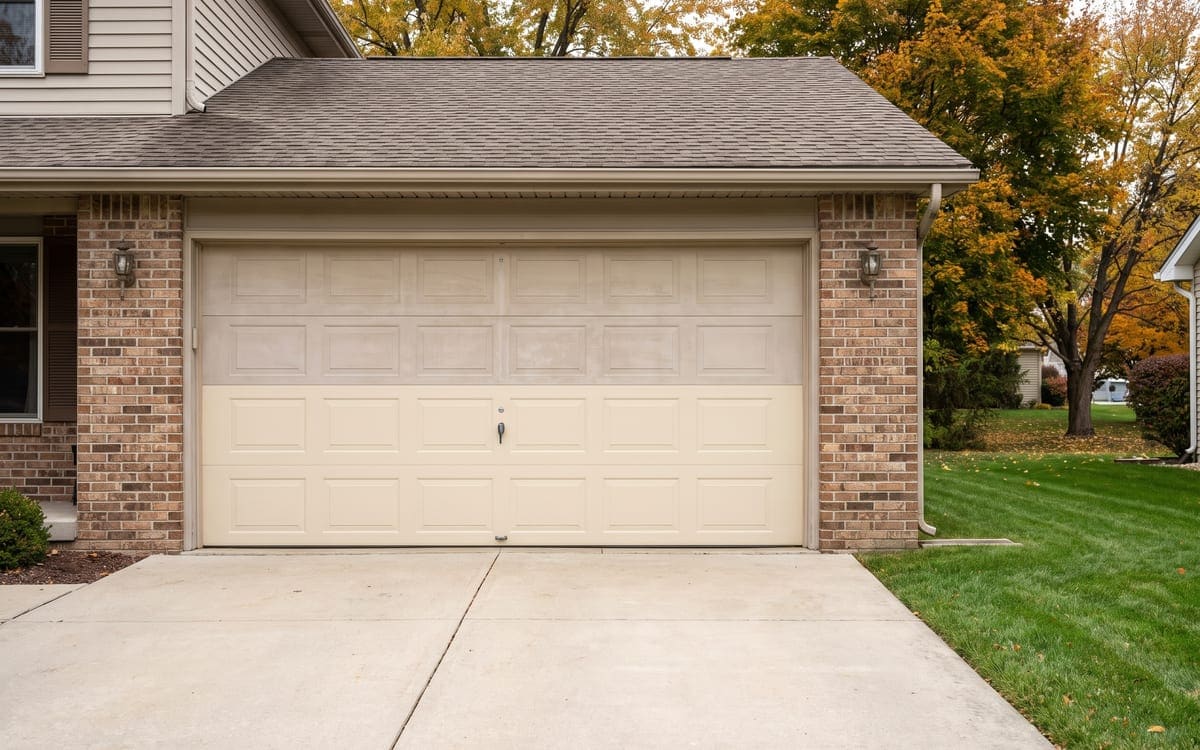
The reflex on a door that has been on the house since the disco years is to change the whole thing. That is not usually the correct read. A garage door is a stack of parts. Springs, cables, drums, tracks, rollers, hinges, panels and seals all live on the door itself, and the opener sits apart from it. Every part has its own life.
When we walk up, the first job is to find out what actually stopped working. Then we look at everything else that touches the failure. If a spring snapped, the cables and drums shared the same load and get inspected. If a panel cracked, we check whether the section above is straight. If the opener quit, the door itself can still be sound. That picture tells us whether one fix carries the door forward or whether the recommendation is a full replacement.
Housing age shapes which answer a given door points to. In Arlington Heights, the median year built for a housing unit is 1974,1 and about 64 percent of housing units went up before 1980.2
When a repair is the clear answer
Do not test a door yourself when a spring or cable has failed. A door in that state is holding its full weight on the remaining hardware. Trying to lift it or trip the emergency release can drop the door or snap a cable across the garage. Leave it alone, keep people and pets clear, and call.
When one part has failed and the rest of the door looks sound, a repair is almost always the right call. A worn roller or a stripped drive gear in the opener are the clearest examples: the door itself may still be in good shape, and a focused repair gets it back in service. Even a snapped torsion spring, which takes the door out of safe service, is still a spring job, not a new door job, when the panels and tracks around it are sound.
Openers pulled off the ceiling for a stripped drive gear, a slack chain, a snapped belt or a limit switch out of adjustment are usually repair jobs when the unit is not too old. Rollers, hinges, cables, drums and weather seals are wear parts, and any of those failing on its own is a repair. A dented panel on its own is often a section swap when the manufacturer still runs that pattern.
When parts are gone
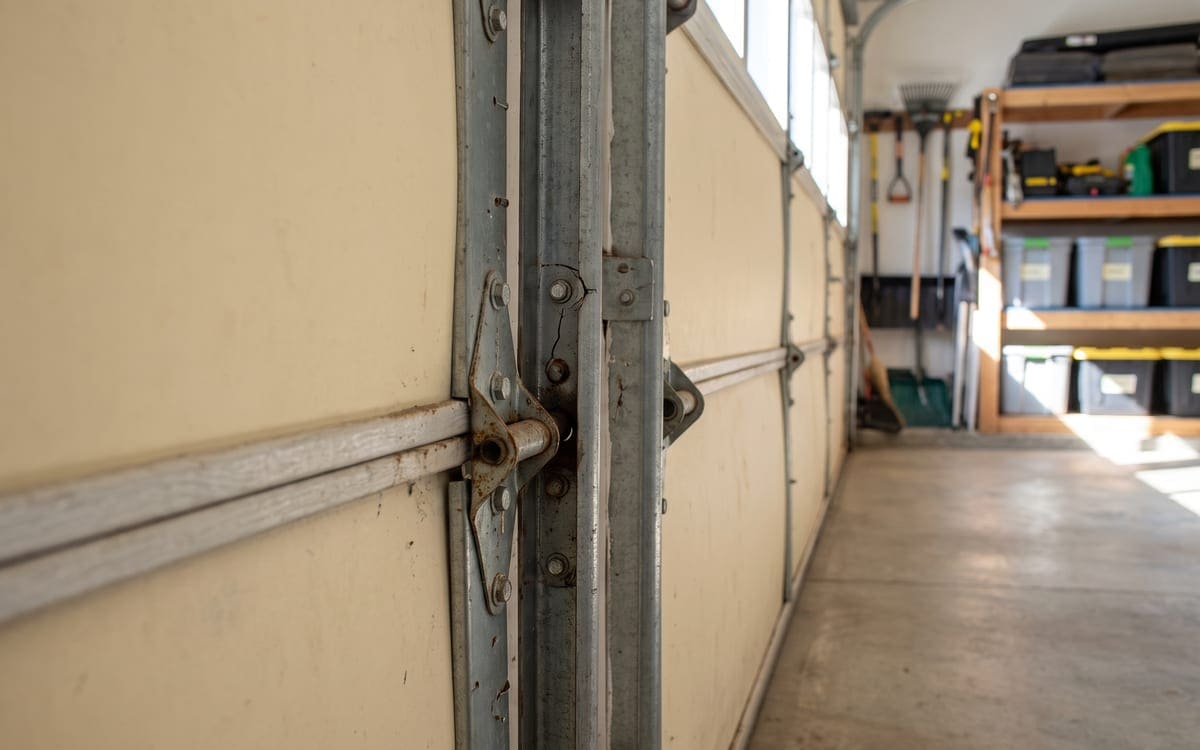
Some doors from the 1960s and 1970s need parts the manufacturers stopped making. Extension springs of the exact rating, hinges that match the panel geometry, drums keyed to an odd shaft, section profiles no manufacturer runs today. When the closest match is a heavier hardware set that would change how the door balances, the fix does more harm than good. That is where choosing a new door is the right call.
The same story runs on older openers. Manufacturers stopped selling boards, gears and receivers for those units long ago. Even when the motor still runs, a board failure ends the opener's service life. The question is whether the parts on the shelf will put the door back on its intended balance.
Several failures at once
A door with a snapped spring, worn cables, a bent bottom section, an out-of-square track and an opener old enough to draw a pension is not a repair job. Each piece could be fixed in isolation. Together, the labor and parts get close to the total on a new door and opener, and the result is new hardware on a body that has been drifting out of true for years. On that kind of door, replacing the whole door pays back. For a look at what pushes a service total, how repair prices add up walks through each driver.
We ask three questions when several things have failed:
- How many separate fixes are needed to get the door safe and working.
- Whether the sections are still straight and the tracks still square, so new hardware would sit on a sound door.
- Whether the opener will still work with the door after the repair, or whether it needs to change too.
If two or more of those answers point at replacement, that is the recommendation.
Safety features the old setup lacks
An older door can sit on a setup that predates the safety features on new hardware. A safety cable threaded through the middle of an extension spring keeps a broken piece from flying if the spring lets go. On a new door it is standard.
Photo eye sensors are the other big one. A modern opener has a pair of low sensors, one on each side of the door near the floor, and the opener stops and reverses when something breaks the beam on the way down. Older openers may not have them at all. Any opener that will lower a door onto a car, a pet or a person is a safety problem, and swapping in a new opener with the low sensors and current reversing behavior is often the biggest safety change on an older setup.
Where a modern opener's safety sensors sit
Two small photo eyes mount low on each vertical track and face each other across the opening.
- Photo-eye on the left track
- Photo-eye on the right track aimed at the one across the opening
- Infrared beam between the two sensors the closing door breaks the beam if a pet or a bag is in the way
- Vertical track
- The door, up overhead
Do not bypass those sensors to make a door close. If the sensors will not let it go down, something in the beam path or the opener needs attention, and that needs a technician.
Insulation and the room above
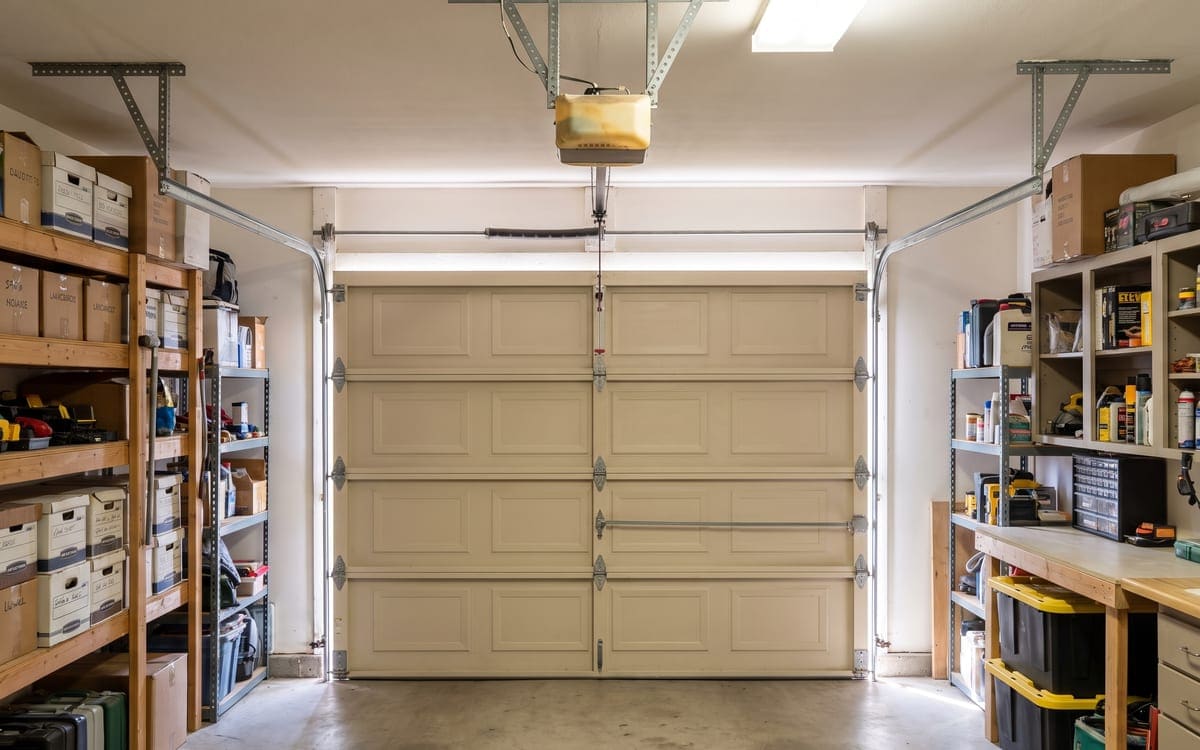
Doors from the middle of the last century were rarely insulated. A single layer of steel or a hardboard-faced wood door has almost no thermal value. That did not matter when a garage was detached and unfinished. It matters a lot on an attached garage with a bedroom or bonus room on top of it.
If the room above runs cold in January or hot in August, and the ceiling itself is properly insulated, the door is often the missing piece. A modern insulated door has a foam layer between an inner and outer skin, and a seal at the perimeter that actually seats. It will not heat the garage, but it evens out temperature swings and cuts opener noise carrying into the house. On a door that is not broken but is leaking a lot of comfort, that is a case where a change is worth thinking about.
Matching the house and HOA rules
A section swap only works if the manufacturer still runs that section's pattern and finish. When the match on offer is close but not the same, replacing a single section can read worse than a whole new door from twenty feet away. Flush panels, recessed and raised panels, carriage-style doors and the various window layouts all have families and years that go together.
For townhomes and condo buildings, the door and opener may sit inside a homeowners association's approved list. Get the association's list before choosing a new door. Our piece on doors on older village homes walks through how the housing eras here map to the door types you see today.
Permits for a replacement
Village permits for garage doors are not clean. The Village lists short guides for a handful of related jobs,3 including a detached garage, a garage-only re-roof, and demolition, but nothing specific to the door itself. Questions on a specific job go to Building and Life Safety at Village Hall. Ask them about yours before the door comes off, and get the answer back in writing if you can.
If your job lands under the Village's alteration, remodel and repair permit, the application requires a contractor with a valid contractor license and a contractor's proposal describing the work and its cost.4 Our permits for a new door piece covers the Village rules in more detail.
Illinois adds one more layer. On home repair work over a set threshold, state law requires a written contract or work order stating the total cost, including parts and materials, and the contractor's business name and address.5 Ask any contractor for that paperwork before work starts.
A simple decision table
| What is going on | Repair or replace |
|---|---|
| One part failed on an otherwise sound door | Repair |
| The failure needs parts nobody makes anymore | Replace |
| Two or more separate failures at once | Usually replace |
| Old opener with no photo eye sensors near the floor | Replace the opener at minimum |
| Cracked panel, matching pattern still available | Section swap |
| Cracked panel, no matching pattern | Replace the door |
| Uninsulated door on an attached garage with a room above | Consider replacement |
| Cosmetic match on an HOA building not possible | Replace the door |