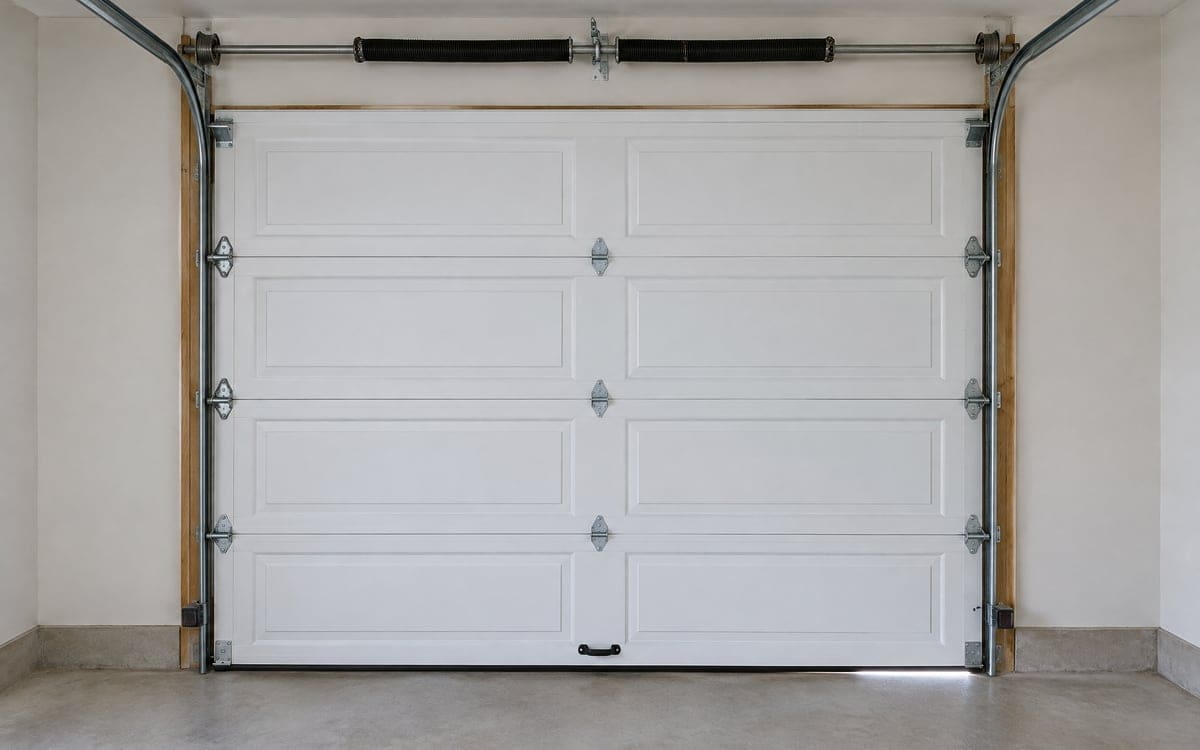
Daylight under the door is the easiest leak to spot
A phone photo taken from inside with the overhead light off reads the gap better than a hand ever will. A finger-wide gap at one corner means the slab has settled or the seal has crushed. A whistle in a breeze means the top seal has pulled away from the header. If the strip looks fine but the daylight comes through in waves, the bottom section of the door itself may have bowed. Keep hands away from the bottom corners, where the brackets and cables live.
The brighter the picture, the worse the gap. On an older white door that is often the only way to see the leak at all.
The bottom seal, the side stops and the top seal do different jobs
A garage door is sealed in three places, and the three parts age differently.
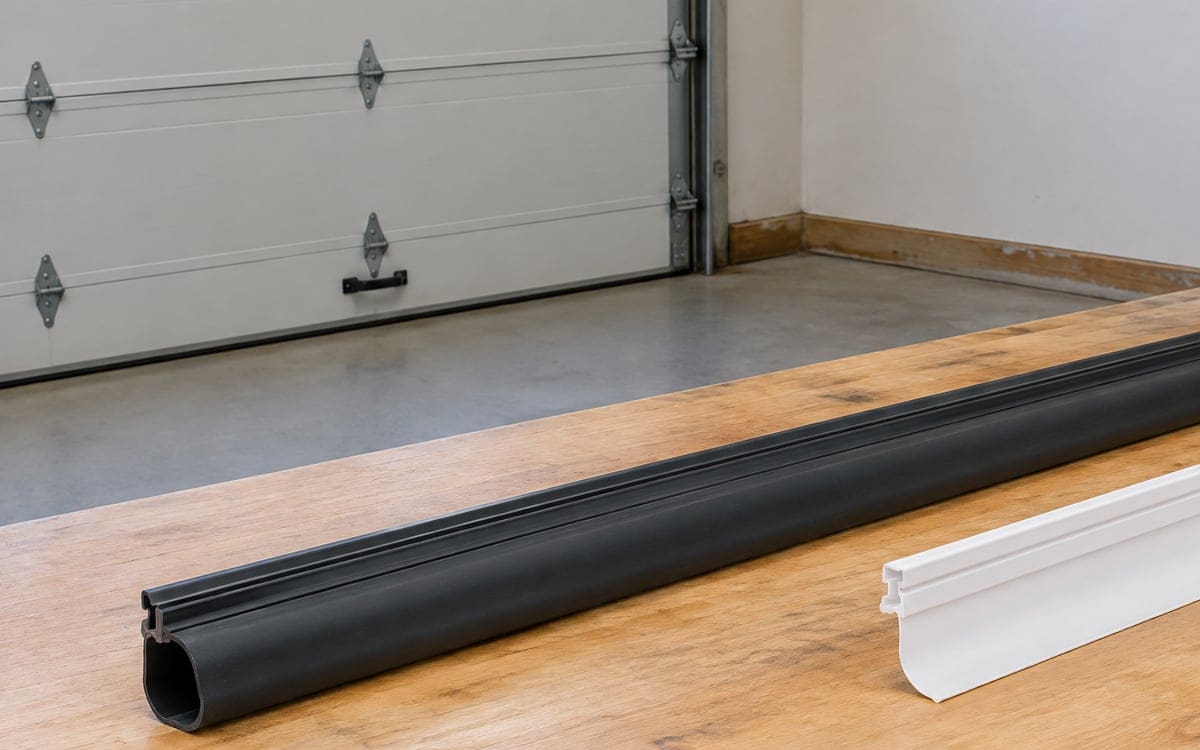
The garage door weather seal most people picture is the big rubber strip along the bottom edge, held in an aluminum retainer screwed into the lowest section. That strip is what folds against the floor when the door closes. It takes the worst of the weather, and it is the first to crack.
The garage door side seal is a vinyl stop running up each jamb, with a soft flange that rides against the face of the door. On an older door the flange goes brittle and curls back from the frame. You see it clearly from inside at knee height on a bright day.
The garage door top seal is a shorter vinyl stop across the header, bent against the top edge of the door when it closes. It is often the newest looking of the three and the easiest to overlook when it fails. Wind drives rain and dry snow under it, so a leak at the top can show up on the floor six feet inside the garage with no obvious source.
Lake-effect snow finds the gaps in an Arlington Heights garage
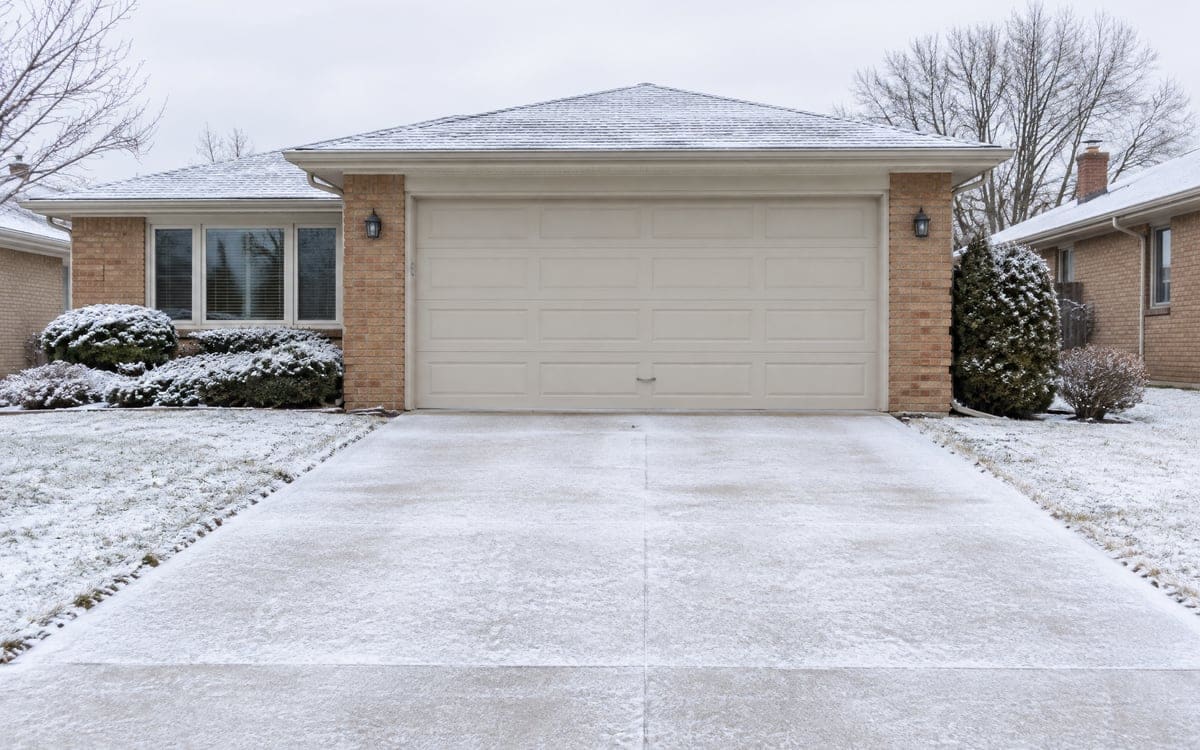
The Illinois State Climatologist says lake-effect snow from Lake Michigan adds to winter snowfall in this part of Illinois.1 Normal seasonal snowfall counted July through June runs to 38.4 inches.2 The normal first measurable snowfall at O'Hare comes on November 18, and the normal last on April 2.3 The season runs between those two dates, and the same three seals carry it from one end to the other.
Drift behaves oddly in a garage opening. It finds any low spot in the slab, any lifted corner of a bottom seal, any gap behind a bent track. Once snow sets up against a cracked strip, afternoon thaw sends water inside the garage instead of back out onto the driveway.
A quick way to pin down which seal is leaking:
| What you see | Likely leak | What it usually needs |
|---|---|---|
| Straight line of daylight across the bottom | Worn or crushed bottom seal | A new bottom strip in the existing retainer |
| Daylight at one bottom corner only | Settled slab or bowed bottom section | New seal plus a step-cut strip, or panel work |
| Curled vinyl up one side | Split or hardened side stop | Fresh length of side stop on that jamb |
| Water inside after wind-driven rain | Failed top seal | New top stop across the header |
| Wavy light along a straight door | Bowed bottom section | Section repair before a seal swap |
When a seal swap is enough
Most leaks come down to the seal, and the fix is usually a new strip. If the aluminum retainer along the bottom is straight and the lowest section of the door is flat, a new rubber bottom seal slides into the same channel. If the vinyl stop up a jamb is cracked but the stop board behind it is sound, a fresh length of stop goes on with new nails.
A good time to swap all three is during a fall garage door tune-up and safety inspection. Hinges and lower rollers get lubricated at the same visit. A door that drops hard or bangs the floor needs its balance and springs checked on a visit before the strip, because a weak spring or a worn opener setting will chew up fresh rubber in a week.
When the gap is from a bent bottom panel
If the bottom panel is dented from a bike or a bumper, or if the steel skin has split along the bottom and water has gotten inside the foam, a new strip seats crooked and leaks within a few weeks. At that point the real repair is garage door panel replacement, and we will say so at the door before any work starts.
Sometimes the leak is the floor, not the door. An older concrete slab that has settled toward the driveway leaves one side of the opening lower than the other. A standard flat seal cannot bridge that step. In that case we fit a taller bulb seal or a step-cut strip that follows the slope. These are small jobs on a visit, but they take care to get right.
What a strip swap takes in parts
The job turns on a short bill of materials: a new bottom strip in the profile and bead size that fits the existing retainer, the retainer channel itself if the old aluminum is bent or split, a new length of vinyl side stop or top stop where a jamb or header has gone brittle, fresh stop nails for a loose stop board, and a lubricant for feeding the fresh rubber through the channel without tearing it.
More matters on the visit than the parts themselves. The door balance, the roller stems, the hinge pins and the bottom brackets all get a look while the door is open and blocked, since the strip is being fed in at both lower corners. Springs, cables and bottom brackets stay with us; they never belong to the homeowner.
Where the weather stripping fits with the rest of the door
A door that leaks air also leaks heat. If the garage shares a wall with a bedroom or a bonus room above, the first fix is the seals and the second is the panels themselves. The post on insulated garage doors in Arlington Heights covers what R-value and U-factor mean for a cold wall. If the hinges and rollers are already pitted from winter chemistry, a fresh seal does not help as much as it should: the piece on what road salt does to garage door hardware explains why.
Full garage door repair is the right call if the door drops hard, hangs crooked or binds in the tracks. A monthly habit of walking through the safety test tends to find a drooping seal before snow does.