Signs the spring has parted
A closed door puts the spring at its highest load, holding the door's whole weight through its tension. When it lets go, you get a door that will not lift and a set of clues on the hardware above it.
1. The sound you heard
The report a torsion spring makes when it parts is loud enough to bring somebody in from another room. An extension spring on a side track goes with a lighter pop and a slap of metal on metal.
2. A gap in the coil above the door
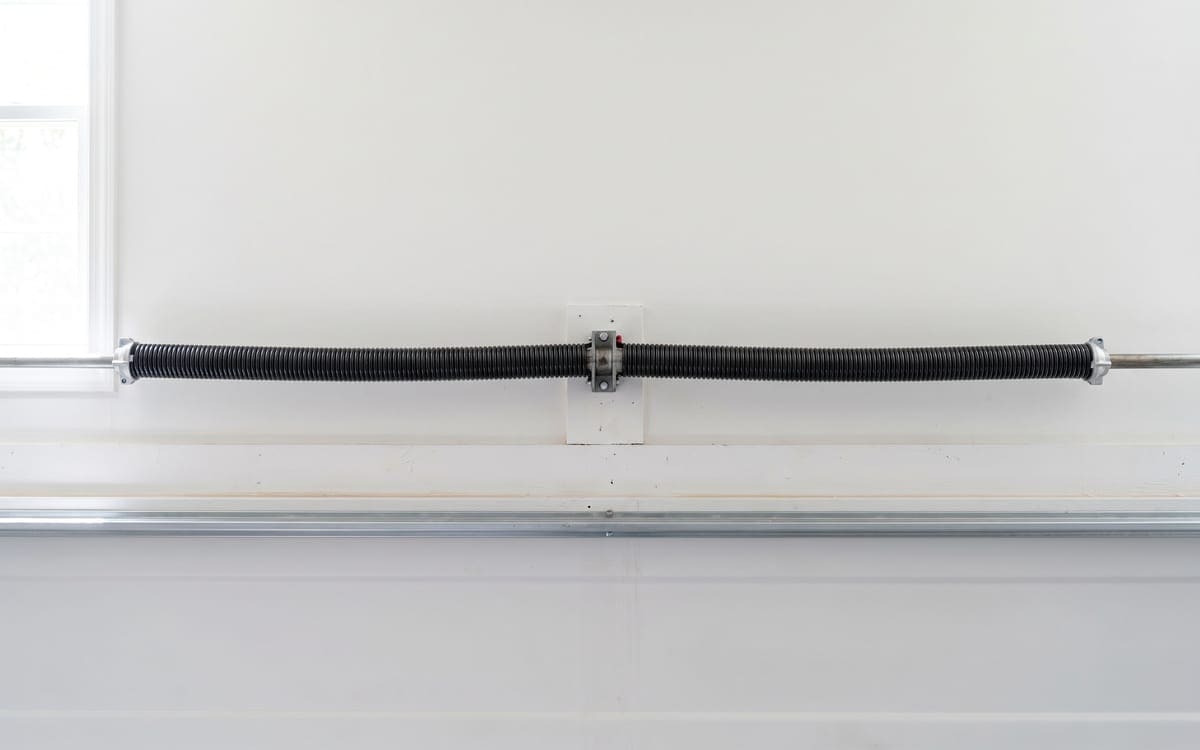
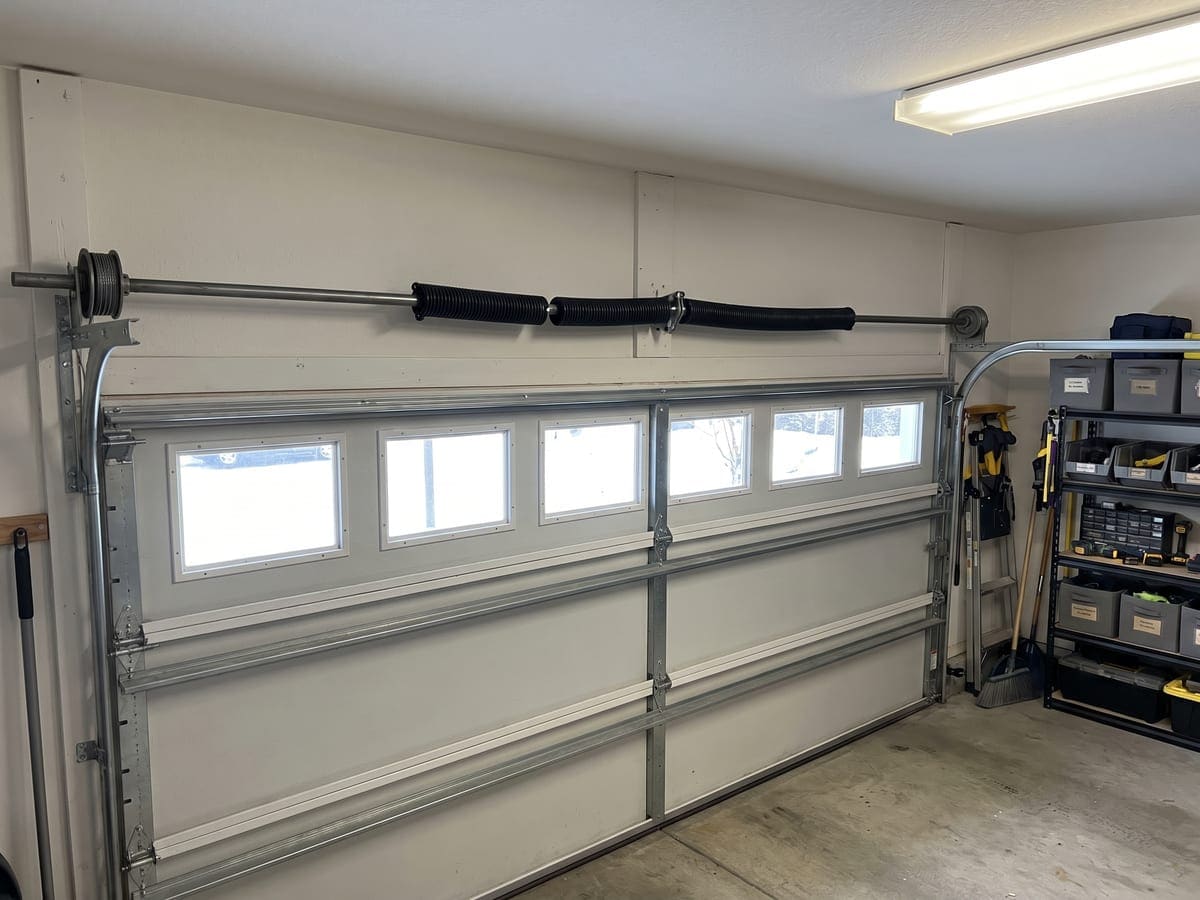
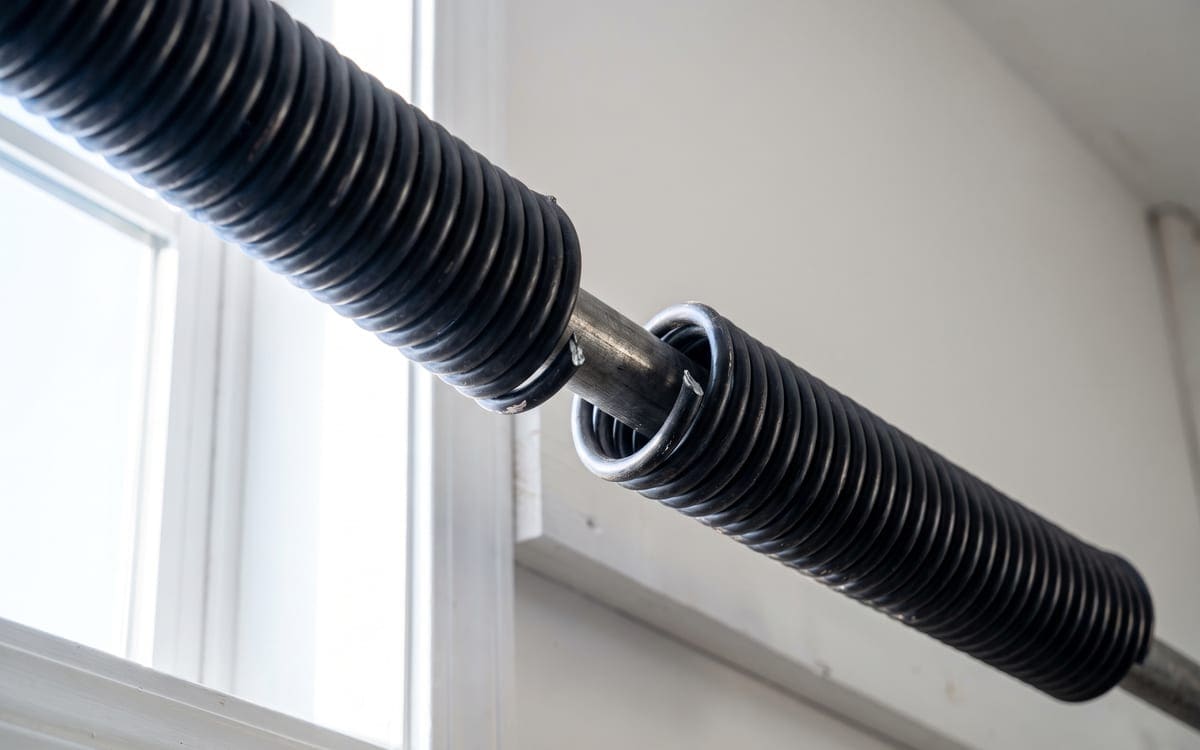
From the garage floor, if it is safe to be in there, look at the shaft above the door. An intact torsion spring is a tight, unbroken coil. A parted one shows a clean gap of a few inches where two halves have snapped apart and unwound.
3. The opener grinds, lifts a little, then quits
Openers are built to move a door the springs already carry, not to lift it themselves. With the springs gone, the opener treats the door as far too heavy and gives up. Please stop pressing the button. Every push after a spring parts can strip a gear or bend the top panel.
4. Loose or unwound cables
The lift cables run from a bottom bracket on each side of the door up to a drum by the spring shaft; the springs relay their lift to the door through those cables. When a spring lets go, the drums no longer hold tension, so the cables that ride on the drums go loose or slip off. Loops of cable inside the tracks are a spring problem showing through the cables.
5. A door that is heavy by hand
Balance is the last read, and we save it for the visit. With the opener disconnected and a safe hold on the door, a balanced door feels almost weightless through the middle of its travel. One with a snapped spring is far too heavy for one person to hold. Lifting it by hand is how homeowners get hurt.
If a spring has broken while the door is up, stay back from the opening. Do not pull the emergency release rope: with the springs gone and the cables slack, the door can fall hard. Do not walk under the raised door to reach an outlet or wall control. Cut power at the breaker only from a spot not below the door.
| Symptom | Likely cause | What it usually needs |
|---|---|---|
| Loud bang from the garage, door will not lift | Torsion spring parted at a coil | Spring replacement, cables checked |
| Door pins to the floor on one side | Extension spring on that side broken | Matched extension springs, safety cables |
| Opener grinds a few inches up, then stops | No spring assist, opener on its own | Spring service before more opener work |
| Cable slack or looped on the drum | Drum unwound after the spring gave out | Spring, both cables, drum reset |
Torsion or extension: what your door is built with
A torsion spring sits on a steel bar above the door and winds tighter as the door lowers, so its tension is highest with the door closed. An extension spring is a stretch spring along a horizontal track, pulled to its longest with the door closed; a safety cable should thread through it so a snapped end cannot whip across the garage. Either way, the safe move is the same: leave the hardware alone and call. The type on your door shapes the parts for the fix.
The torsion spring, shaft and drum chain
A torsion spring sits on the shaft above the door and connects through the drums to the lift cables that carry its tension to each bottom corner.
- Winding cone (outer end)
- Torsion springs one on each side of center
- Center bracket anchors both springs
- Shaft, across the top
- Cable drum
- Cable drum to bottom bracket
- Bottom bracket
- Vertical track
- Rollers in the track
- Four door sections
A short glossary
- Torsion spring: the wound spring on the bar above the door.
- Extension spring: the stretch spring running along a horizontal track.
- Cycle rating: the number of open and close cycles a spring is built to survive.
- Safety cable: a steel cable through an extension spring to catch a snapped end.
- Spring conversion: swapping an extension setup for a torsion bar above the door.
Replacing the spring, or knowing the door itself is done
We replace the spring when the door around it is sound: panels intact, hinges fixed to the wood, bottom fixture in one piece, no rust through the lower panel. We bring up a new door when panels are cracked through, the bottom bracket is torn, an impact has creased the top section, or a third or fourth spring failure in a couple of years points to worn-out hardware.
If two springs sit on the bar, we replace both, even when only one has snapped. The survivor is on the same cycle count as the one that failed. On an older door with extension springs and no safety cables, we can add them. A conversion from extension to torsion is a bigger job and comes up only when the tracks and pulleys are worn out too.
What the visit covers
A spring job can involve torsion springs in common wire sizes and lengths, extension springs paired with safety cables, winding cones, center and end bearings, lift cables, drums, and fresh mounting hardware for a stripped bracket. If a size is one we have to order, we say so at the door before anything else happens.
From your call to a balanced door
- Your call. Tell us whether the door is closed, up, or stopped part way, whether a car is inside, and whether you heard the spring go.
- Arrival and inspection. We unplug the opener, look over the springs, cables, drums and bottom brackets, and confirm the door sits square in the tracks.
- The go-ahead. We walk you through what we are replacing and why.
- The work and a test run. We fit the springs, wind them to match the door, seat the cables on the drums, and reconnect the opener.
Winter, older houses, and a spring under load
Chicago's normal January mean is 25.2 degrees F,1 and northern Illinois sees roughly 140 freezing days a year plus 16 that drop to 0 or below.2 Our post on winter and garage door springs covers the cycle math.
Arlington Heights homes carry a median build year of 1974,3 and about 64 percent of the village's housing units stand from before 1980.4 Older doors can carry setups worth checking on the first visit: a single torsion spring, extension springs with no safety cable through them, or a bar that was never upgraded when a heavier door went in. Our note on doors in older village homes covers the pattern.